
Welcome to this practical guide on do you need building consent for renovation Christchurch, created to help homeowners understand when renovation work may require approval, why consent matters, and how the right planning can protect your property, budget, and peace of mind. Whether you are updating a kitchen, changing a bathroom, removing walls, adding a deck, or planning a larger home extension, knowing the difference between minor cosmetic work and consented building work can help you avoid delays, compliance issues, insurance concerns, and costly mistakes. This article explains the key points in a clear, homeowner-friendly way so you can approach your renovation with more confidence and make informed decisions before work begins.
You may need building consent for renovation Christchurch if your project involves structural changes, plumbing alterations, extensions, load-bearing wall removal, major waterproofing, or safety-related work. Cosmetic updates usually do not require consent, but requirements depend on the project, property, and Christchurch City Council rules.
Table of Contents
What Is Building Consent And Why Does It Matter?
Building consent is one of the most important parts of planning a renovation in Christchurch because it confirms that certain building work has been properly assessed before construction begins. For homeowners, it is not just a council requirement. It is a safeguard that helps protect the safety, value, legality, and long-term performance of the property.
Understanding Building Consent In New Zealand
In New Zealand, building consent is formal approval from a Building Consent Authority, usually the local council, that confirms proposed building work is expected to comply with the Building Act, Building Regulations, and New Zealand Building Code when completed according to the approved plans and specifications. For homeowners asking do you need building consent for renovation Christchurch, the answer depends on the type of renovation, the level of risk involved, and whether the work affects structural safety, weathertightness, plumbing, drainage, fire safety, or other regulated building requirements.
The purpose of the building consent process is to make sure building work is planned, documented, inspected, and completed to an acceptable standard. This matters because renovation work can affect more than appearance. A wall removal, bathroom upgrade, deck build, or home extension can change how a house performs, how loads are supported, how moisture is controlled, and how safe the property is for everyday use.
Local councils play a key role in this process. In Christchurch, the council reviews building consent applications, checks plans and supporting documents, issues approvals where requirements are met, carries out inspections during the work, and confirms completion through the Code Compliance Certificate process when applicable.
- Building Consent Authority: This is the organisation responsible for checking whether proposed building work meets legal and technical requirements before it is carried out.
- Approved Plans: These are the drawings, specifications, and supporting documents that show how the renovation must be completed.
- Compliance Requirements: These include the rules and performance standards that help ensure the work is safe, durable, accessible where required, and suitable for its intended use.
- Code Compliance Certificate: This is usually issued after completion to confirm that the finished work complies with the approved building consent.
Why Building Consent Protects Homeowners
Building consent protects homeowners by reducing the risk of unsafe, non-compliant, or poorly documented renovation work. While the process can feel like an extra step, it gives the homeowner a clearer path from planning to completion and helps confirm that critical parts of the project have been properly reviewed.
Safety is one of the biggest reasons consent matters. Renovation work that affects framing, foundations, decks, stairs, waterproofing, fire separation, drainage, or load-bearing elements can create serious risks if it is not designed and built correctly. A consented process helps ensure the right professionals are involved and that the work is checked at key stages.
Structural integrity is another major factor. For example, removing a load-bearing wall without proper assessment can cause cracking, sagging, or long-term movement in the home. Adding a second-level extension, changing roof framing, or building a raised deck can also place new demands on the existing structure. Building consent helps ensure those changes are properly designed before work starts.
Consent also supports compliance with the New Zealand Building Code. The Building Code sets performance-based standards for building work, covering matters such as structure, moisture control, durability, fire safety, drainage, and sanitation. This is especially important in renovation projects where new work must connect safely with older parts of the home.
Future property sale considerations are also important. When a home is sold, buyers, lawyers, lenders, insurers, and building inspectors may ask whether renovation work was completed with the required approvals. If records are incomplete or work was done without required consent, it can create uncertainty and reduce buyer confidence.
- Safety Protection: Consent helps confirm that higher-risk renovation work has been reviewed before it affects the people living in the home.
- Structural Confidence: Proper assessment helps reduce the chance of movement, cracking, water damage, or failure caused by poorly planned alterations.
- Legal Documentation: Council records can show that required approvals and inspections were part of the renovation process.
- Property Value Support: Well-documented, compliant renovation work can make a home easier to insure, refinance, and sell.
Consequences Of Renovating Without Required Consent
Renovating without required consent can create problems that are far more expensive and stressful than applying for approval at the start. Some homeowners only discover an issue years later when they try to sell, refinance, insure, or complete further renovations. By then, the original builder may be unavailable, details may be unclear, and fixing the problem can become complicated.
One possible consequence is enforcement action. If council becomes aware that building work requiring consent has been carried out without approval, the homeowner may need to stop work, provide documentation, apply for retrospective approval where possible, or complete remedial work. In some situations, fines or formal notices may apply.
Delays and remediation costs can also become significant. Work may need to be opened up so inspectors or professionals can see what has been done behind walls, under floors, or inside roof spaces. For example, unconsented bathroom waterproofing, drainage changes, or structural alterations may require additional investigation before the issue can be resolved.
Insurance complications are another concern. If unconsented work contributes to damage, failure, leaks, or safety issues, insurers may question whether the work was legal and compliant. This does not mean every claim will automatically be declined, but it can make the process more difficult and uncertain.
Selling a property can also become harder when unconsented work appears on a building report, LIM report, or buyer due-diligence checklist. Buyers may request a price reduction, ask for the issue to be resolved before settlement, or walk away because the risk feels too high. This is why proper building-consent planning is not just about passing council checks. It is also about protecting the long-term marketability of the home.
- Potential Fines: Homeowners may face penalties or formal council action if regulated building work is completed without required approval.
- Project Delays: Work may need to pause while documentation, inspections, or corrective steps are arranged.
- Remediation Costs: Non-compliant work may need to be altered, rebuilt, exposed, or professionally assessed.
- Insurance Issues: Unapproved work can create uncertainty if a future claim relates to the renovated area.
- Sale Complications: Missing consent records can reduce buyer confidence and create negotiation problems during a property sale.
Understanding building consent early helps homeowners make better renovation decisions, avoid avoidable risks, and keep their project on the right side of New Zealand building requirements. If there is any doubt about whether consent is needed, it is always safer to check before work begins rather than trying to fix compliance issues after the renovation is complete.
Do All Renovations Require Building Consent In Christchurch?
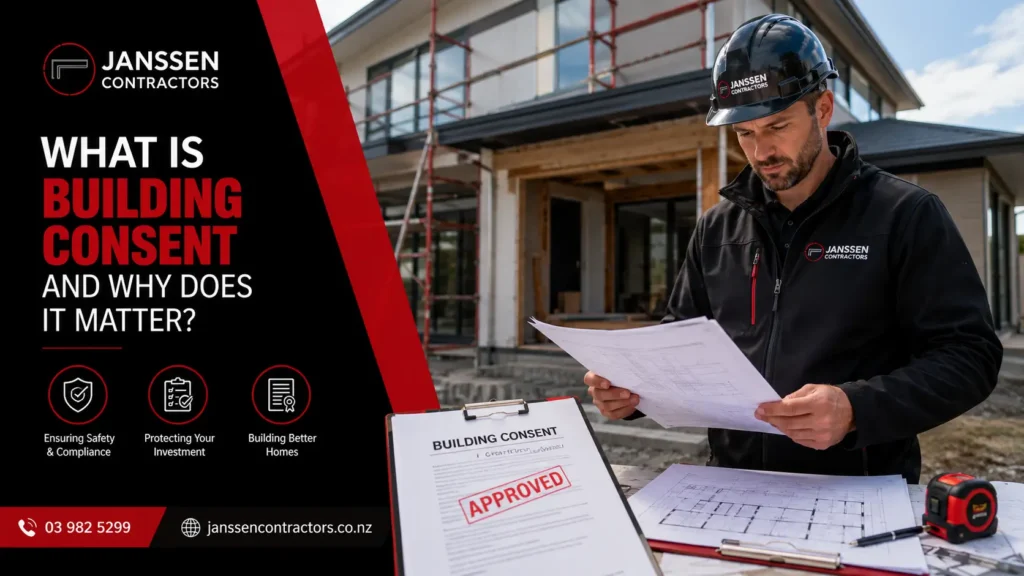
Not every renovation in Christchurch needs building consent, but it is important to understand where the line is. Some home-improvement projects are simple cosmetic updates, while others affect the structure, safety, plumbing, drainage, or weather-tightness of a property. Before starting any renovation, homeowners should check whether the work falls under exempt building work or whether Christchurch City Council approval is needed.
Renovations That Usually Do Not Require Building Consent
Many small-scale renovations can usually be completed without building consent because they do not change the structure, safety performance, or essential building systems of the home. These projects are generally lower-risk, but they should still be completed to a good standard.
- Cosmetic renovations: Simple visual updates, such as repainting walls, refreshing finishes, or replacing decorative features, usually do not require building consent because they do not affect the building’s structure or compliance.
- Interior painting: Painting interior walls, ceilings, trims, and doors is considered maintenance or cosmetic work, so homeowners can usually complete it without council approval.
- Flooring replacement: Replacing carpet, vinyl, tiles, or timber flooring generally does not require consent, provided the work does not involve structural changes or major waterproofing alterations.
- Kitchen cabinetry updates: Installing new cabinets, benchtops, handles, or storage units is usually consent-free when the plumbing, drainage, and structural layout remain unchanged.
- Minor repairs and maintenance: Small repair work, such as fixing damaged linings, replacing worn fittings, or maintaining existing materials, may not need consent if it does not reduce the building’s safety or performance.
Even when consent is not required, the work should still meet the New Zealand Building Code where applicable. A renovation that looks simple on the surface can become more complex if it involves hidden plumbing, electrical work, wall framing, moisture control, or fire-safety requirements.
Renovations That Commonly Require Building Consent
Renovations are more likely to need building consent when they affect the safety, structure, durability, or essential services of a home. These projects usually require proper plans, documentation, inspections, and approval before work begins.
- Structural alterations: Any renovation that changes framing, foundations, bracing, beams, or structural support will commonly require building consent because it can affect the strength and stability of the home.
- Extensions and additions: Adding a new room, extending a living area, building a second-storey addition, or increasing the building footprint usually requires consent because the work changes the approved structure and layout.
- Load-bearing wall removal: Removing or altering a load-bearing wall is a high-risk renovation because the wall supports weight from above. This type of work usually needs engineering input and council approval.
- Significant plumbing work: Moving plumbing fixtures, changing drainage lines, adding new bathrooms, or making major wet-area changes may require consent, especially where waterproofing and drainage performance are involved.
- Decks above specific heights: Some low-level decks may be exempt, but higher decks often require consent due to fall-risk, balustrade, footing, and structural requirements.
- Major roofing changes: Replacing roofing like-for-like may be maintenance, but changing the roof structure, pitch, framing, cladding system, or drainage design can trigger consent requirements.
These types of renovations are not just paperwork issues. Consent helps confirm that the work is properly designed, safely built, and inspected at key stages. This can protect the homeowner from future problems with insurance, property sales, code compliance, and long-term building performance.
Why Every Renovation Project Is Different
A common mistake is assuming that one renovation will have the same consent requirements as another. In reality, two projects that sound similar can be treated differently depending on the property, the design, the materials, and the level of risk involved.
- Property-specific factors: The age, condition, layout, zoning, and history of the home can all influence whether consent is needed. Christchurch homes may also have earthquake-related considerations, previous alterations, or site-specific constraints.
- Scope of work: A basic bathroom refresh is very different from a bathroom relocation involving new drainage, waterproofing, and wall changes. The more the project affects key building systems, the more likely consent becomes.
- Site conditions: Ground conditions, slope, drainage, boundary location, flood-risk areas, and access can all affect renovation requirements, especially for additions, decks, garages, and outdoor structures.
- Council interpretation and requirements: Christchurch City Council may assess details differently depending on the submitted plans and the nature of the work. Getting clear advice early can prevent delays, redesigns, and unexpected costs.
The safest approach is to confirm consent requirements before committing to construction. A builder, designer, architect, or council advisor can help identify whether the proposed work is exempt or whether a building-consent application is needed. This early check can save time, protect your investment, and give you confidence that the renovation is being handled correctly.
Understanding whether your renovation needs building consent in Christchurch is an important part of planning a safe, compliant, and stress-free project. When in doubt, it is always better to ask before work begins, because clear advice early can prevent costly issues later and help your renovation move forward with fewer surprises.
Common Home Renovation Projects And Their Consent Requirements
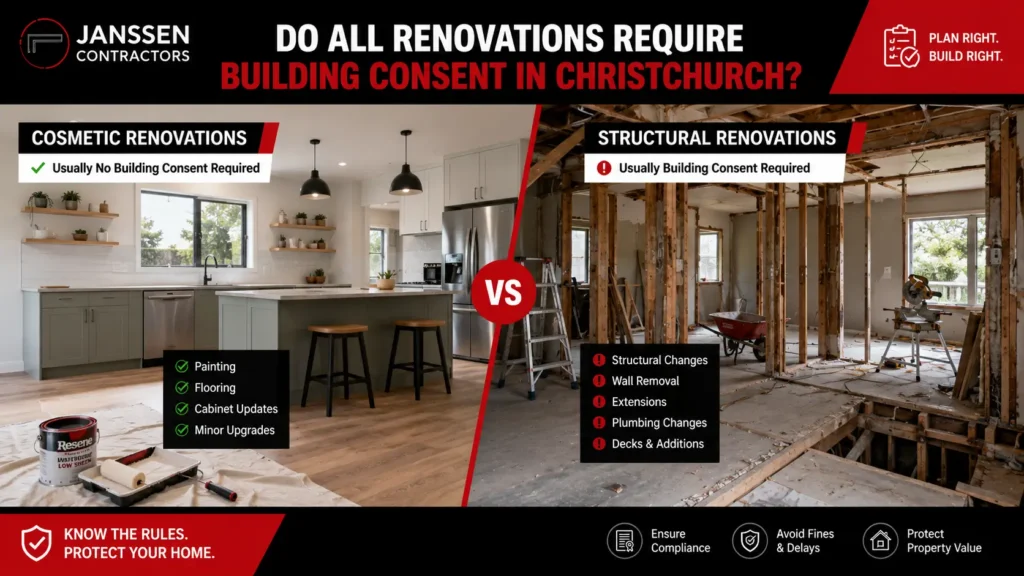
Many Christchurch homeowners ask whether everyday renovation work needs building consent, and the answer depends on the type of work, the level of risk, and whether the project affects structure, plumbing, drainage, fire safety, or weathertightness. Some low-risk work may be exempt, but exempt work must still meet the New Zealand Building Code, and Christchurch City Council may still need to be involved for certain projects.
Kitchen Renovations
Kitchen renovations are often split into two categories: cosmetic updates and building-work changes. If you are replacing cabinets, benchtops, appliances, splashbacks, or flooring in the same general layout, building consent may not be required because the work is usually low-risk and does not significantly affect the building’s structure or safety.
Consent becomes more likely when the renovation involves work that changes how the home functions behind the walls, under the floor, or through the roof space. For example, moving plumbing points, changing drainage, removing a load-bearing wall, altering ventilation, or making structural changes can trigger building-consent requirements.
- Like-for-like replacements: Replacing old cabinets, fixtures, or finishes in the same position is usually simpler because it does not normally alter structural or safety-critical building systems.
- Plumbing changes: Moving a sink, dishwasher, or waste line can affect drainage and sanitary systems, so it should be checked before work begins.
- Structural alterations: Removing walls to create an open-plan kitchen can require professional assessment, especially if the wall carries roof, ceiling, or upper-floor loads.
- Compliance records: Keeping plans, invoices, and professional advice is useful if you later sell the property or need to prove the renovation was completed correctly.
Bathroom Renovations
Bathroom renovations need careful planning because they often involve plumbing, waterproofing, ventilation, and moisture-control issues. A basic refresh, such as replacing a vanity, mirror, tapware, or tiles in the same layout, may be straightforward, but deeper renovation work can quickly move into consent-sensitive territory.
The biggest risk in bathrooms is hidden failure. Poor waterproofing, incorrect drainage, or unapproved layout changes may not show problems immediately, but they can cause long-term damage to framing, flooring, and adjoining rooms. That is why bathroom renovations should always be assessed carefully before work starts.
- Plumbing considerations: Relocating toilets, showers, baths, or basin waste pipes may require consent because it changes the home’s sanitary plumbing or drainage arrangement.
- Waterproofing requirements: Wet-area work must be completed correctly to help prevent leaks, mould, and structural damage.
- Structural modifications: Enlarging a bathroom, removing walls, cutting into framing, or changing floor levels may require consent and design input.
- Ventilation upgrades: Bathrooms need effective moisture control, so changes to extraction systems, windows, or layout should be considered as part of the overall compliance picture.
Home Extensions And Additional Rooms
Home extensions and new rooms are among the renovation projects most likely to require building consent. This is because they usually affect the home’s structure, foundations, roofline, cladding, insulation, drainage, fire-safety requirements, and overall Building Code compliance.
In Christchurch, extensions also need careful site-specific planning. Ground conditions, drainage, earthquake-related considerations, boundary setbacks, and existing-building condition can all influence the design and approval process. A well-prepared application with accurate drawings and supporting documents can reduce delays and help the project move more smoothly.
- Building-consent requirements: Extensions generally need consent because they create new enclosed building space and change the structure of the property.
- Design documentation: Councils usually need clear plans showing foundations, framing, insulation, cladding, roofing, drainage, and structural details.
- Engineering considerations: Larger openings, new roof loads, foundation design, and ground conditions may require input from an engineer.
- Existing-home integration: The new work must connect properly with the existing home, especially around weathertightness, floor levels, roof junctions, and exterior cladding.
Deck Construction And Outdoor Living Areas
Decks are popular in Christchurch renovations, but consent requirements depend on height, design, safety risk, and whether the structure is attached to the home. Low-level decks may be exempt in some situations, while elevated decks, complex structures, or decks with safety barriers often need closer review.
Even when a deck does not need building consent, it still needs to be built safely and in line with Building Code expectations. Poor foundations, weak fixings, incorrect balustrades, or inadequate bracing can create serious safety risks, especially for raised outdoor-living areas.
- Height restrictions: Deck height is one of the main factors that affects consent requirements, especially where a fall risk is created.
- Safety requirements: Elevated decks may need compliant barriers, safe stairs, slip-resistant surfaces, and secure structural connections.
- Structural compliance: Posts, piles, joists, bearers, fixings, and bracing need to suit the size, load, and exposure of the deck.
- Connection to the home: Decks fixed to the house must be detailed carefully to avoid water entry and long-term weathertightness problems.
Garage Conversions And Sleepouts
Garage conversions and sleepouts often require more than a simple building upgrade because they can change a non-habitable area into a habitable space. Once a space is used for sleeping, living, or long-term occupation, it may need to meet higher standards for insulation, ventilation, fire safety, moisture control, access, and durability.
Some small detached sleepouts may qualify for consent exemptions in specific situations, but the rules are conditional and do not remove the need to comply with the Building Code. Sleepouts with bathrooms, toilets, or kitchens are more complex and are more likely to require consent because they involve sanitary plumbing, drainage, and additional safety requirements.
- Habitable-space requirements: Converted garages and sleepouts may need suitable ceiling height, natural light, ventilation, insulation, moisture control, and safe access.
- Fire-safety considerations: Fire separation, smoke alarms, escape routes, and proximity to boundaries may need assessment.
- Insulation standards: A garage that was not originally designed as living space may need upgrades to walls, ceilings, floors, windows, and doors.
- Plumbing and drainage: Adding a bathroom, laundry, kitchenette, or toilet can significantly change the consent requirements.
- Long-term property value: Properly consented work gives future buyers, insurers, and lenders more confidence that the renovation was completed legally and safely.
Before starting any renovation, it is worth checking the consent position early rather than trying to fix issues later. A short conversation with Christchurch City Council or an experienced renovation professional can help confirm what applies to your project, reduce compliance risks, and give you a clearer path from planning to completion.
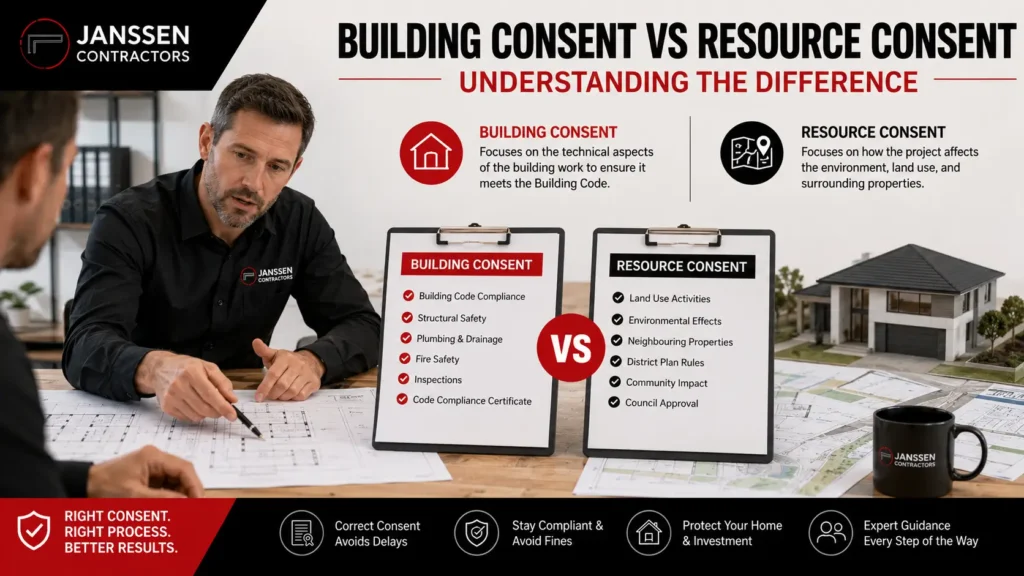
Building Consent Vs Resource Consent: Understanding The Difference
When planning a renovation in Christchurch, it is important to understand that building consent and resource consent are not the same thing. Both can affect whether your project can legally move forward, but they deal with different parts of the approval process. Building consent focuses on how the work is constructed, while resource consent looks at how the work affects the land, neighbouring properties, and local-planning rules.
What Is Building Consent?
Building consent is approval that confirms proposed building work meets New Zealand Building Code requirements. It is mainly concerned with safety, durability, structural performance, weather-tightness, fire protection, drainage, and other construction standards.
For renovation work, building consent may be needed when the project affects the structure, safety, or performance of the home. This can include removing a load-bearing wall, altering plumbing, adding new rooms, changing structural framing, or completing significant bathroom-renovation work involving waterproofing and drainage. The purpose is to make sure the finished work is safe, compliant, and suitable for long-term use.
A useful way to think about building consent is this: it checks whether the renovation is being built properly. It does not usually focus on whether the project is suitable for the neighbourhood or property boundaries. Instead, it focuses on whether the construction itself meets required building standards.
- Structural Safety: Building consent helps confirm that walls, beams, foundations, floors, and roof structures are designed and built correctly.
- Code Compliance: The approval process checks that the proposed work meets relevant Building Code requirements before construction begins.
- Future Property Protection: Properly consented work can reduce issues with insurance, refinancing, and future property sales.
What Is Resource Consent?
Resource consent is different because it focuses on land use and planning considerations. It looks at whether the proposed renovation or development fits within local council planning rules, including zoning, boundaries, height limits, site coverage, outdoor space, privacy, shading, and effects on neighbouring properties.
In Christchurch, resource consent may become relevant if a renovation changes how the property is used or affects the surrounding environment. For example, a home extension close to a boundary, a second dwelling, a large garage, or work on a heritage-property site may need planning approval before building work can proceed.
A simple way to understand resource consent is this: it checks whether the project is appropriate for the site and surrounding area. Even if the building work is technically sound, the project may still need resource consent if it does not fully comply with local-planning rules.
- Land-Use Rules: Resource consent considers whether the project fits the zoning and planning requirements for the property.
- Neighbouring Effects: Council may assess whether the work affects privacy, sunlight, outlook, access, or nearby properties.
- Site-Specific Restrictions: Some properties have special rules relating to heritage, flooding, overlays, setbacks, or character-area requirements.
Projects That May Require Both
Some renovation projects may need both building consent and resource consent. This usually happens when the work involves physical construction and also raises planning-related issues. In these cases, homeowners need to consider both the technical-building requirements and the local-planning rules before starting work.
Property extensions are a common example. An extension may need building consent because it involves new foundations, framing, roofing, insulation, and structural work. It may also need resource consent if it exceeds site-coverage limits, sits too close to a boundary, affects sunlight access, or does not comply with district-plan requirements.
Boundary-related developments can also trigger both approvals. For example, adding a garage, deck, sleepout, or large outdoor structure near a boundary may require building consent for construction safety and resource consent for setback, height, privacy, or shading considerations.
Significant alterations can be more complex because they may change the building layout, use, appearance, or relationship with neighbouring properties. This is why early planning is so important. Before committing to designs, costs, or construction dates, it is wise to confirm whether the project needs building consent, resource consent, or both.
- Property Extensions: These often involve structural-building work and may also affect site coverage, boundary setbacks, or outdoor-living space.
- Boundary-Related Developments: Projects close to neighbouring properties may raise privacy, access, sunlight, and planning-compliance concerns.
- Significant Alterations: Major renovations can affect both construction standards and land-use requirements, especially when changing the size, layout, or function of the home.
Understanding the difference between building consent and resource consent can help Christchurch homeowners avoid delays, unexpected costs, and compliance problems. By checking the rules early and working with experienced renovation professionals, you can plan your project with greater confidence and make sure each stage is handled correctly.
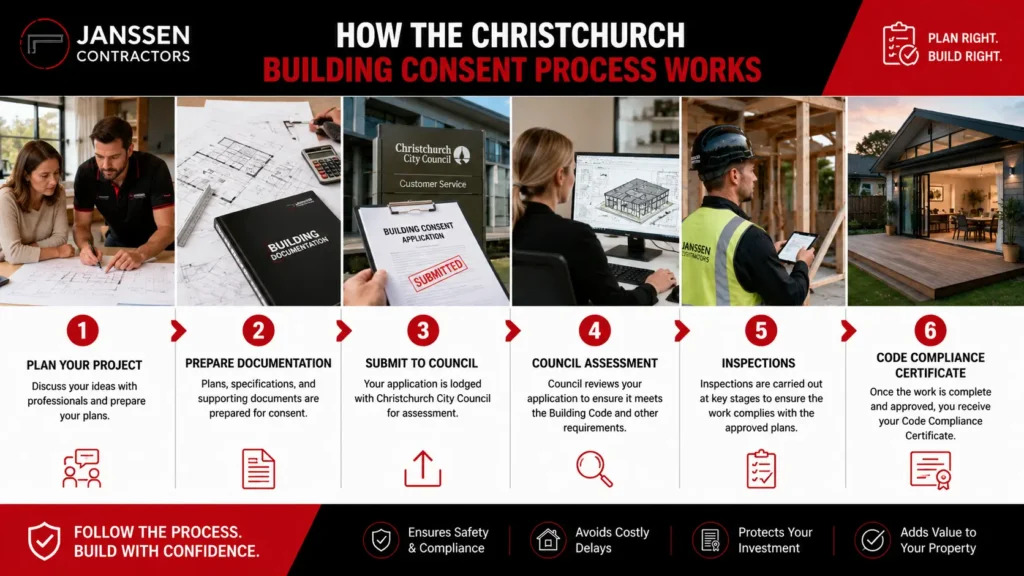
How The Christchurch Building Consent Process Works
Understanding how the Christchurch building consent process works can make a renovation project feel much more manageable. While the exact steps can vary depending on the size and complexity of the work, most projects follow a clear path from early planning through to council approval, inspections, and final sign-off. For homeowners asking do you need building consent for renovation Christchurch, the safest starting point is to understand the process before any building work begins.
Planning Your Renovation Project
Good planning is the foundation of a smooth consent process. Before preparing an application, you need to be clear about what you want to change, why the work is needed, and whether it may affect the structure, safety, plumbing, drainage, fire performance, or weathertightness of the home.
Defining the project scope early helps you understand whether the renovation is minor cosmetic work or building work that may require council approval. For example, replacing benchtops or repainting a room is very different from removing a load-bearing wall, changing bathroom plumbing, building an extension, or converting a garage into a habitable room.
Gathering information early also helps prevent delays later. This may include checking existing house plans, understanding site conditions, reviewing previous renovation records, and speaking with a qualified builder, designer, architect, or building consultant.
- Project Scope: Clearly list the work being completed, including structural changes, plumbing changes, layout changes, and any external additions.
- Site Information: Check whether the property has heritage, zoning, drainage, flood-risk, or earthquake-related considerations that may affect the approval process.
- Professional Advice: Speak with experienced renovation professionals before work begins so potential consent issues can be identified early.
Preparing Documentation
Once the project scope is clear, the next step is preparing the documentation needed for the building consent application. Christchurch City Council will need enough detail to assess whether the proposed renovation complies with the New Zealand Building Code and relevant local requirements.
Architectural plans are usually required for renovation work involving structural changes, extensions, layout alterations, or new building elements. These plans should clearly show the existing structure, proposed changes, dimensions, materials, and construction details.
Engineering reports may also be needed when the renovation affects load-bearing elements, foundations, retaining walls, structural beams, or earthquake-strengthening work. In Christchurch, this can be especially important because many homes have site-specific ground conditions or earthquake-related building considerations.
Supporting documentation helps council understand the full project. This may include product specifications, bracing calculations, waterproofing details, drainage plans, fire-safety information, energy-efficiency details, and evidence of compliance with relevant standards.
- Architectural Plans: These show the proposed renovation in detail and help council assess layout, construction methods, materials, and compliance.
- Engineering Reports: These are often needed for structural work, especially where walls, beams, foundations, or load-bearing systems are being changed.
- Supporting Documents: Product details, specifications, calculations, and compliance evidence can reduce the chance of council requesting more information.
Lodging Your Application
After the documentation is prepared, the building consent application can be submitted to Christchurch City Council. A complete and accurate application gives the project the best chance of moving through the review process without unnecessary delays.
The council submission process usually involves uploading or providing the required forms, plans, reports, and supporting documents. Council officers then review the application to confirm whether the proposed work meets Building Code requirements. If information is missing or unclear, they may issue a request for further information, which can pause the review until the applicant responds.
Typical review periods can vary depending on the complexity of the project and the quality of the application. Simple renovations may be assessed more quickly, while larger extensions, structural alterations, or projects involving engineering input can take longer. Delays are more likely when plans are incomplete, details conflict, or important compliance information is missing.
- Complete Application: A well-prepared application should include all required forms, drawings, reports, specifications, and compliance details.
- Council Review: Council checks whether the proposed renovation meets Building Code requirements before granting consent.
- Information Requests: If details are unclear, council may ask for further information, which can extend the approval timeframe.
Inspections And Final Approval
Once building consent is approved, the renovation work must be completed in line with the approved plans. For consented work, inspections are usually required at specific stages to confirm the building work is being carried out correctly.
Required inspections depend on the type of renovation. A bathroom renovation may need waterproofing and plumbing inspections, while an extension may require foundation, framing, insulation, cladding, and final inspections. These inspections are important because they help confirm that hidden or critical work has been checked before the next stage begins.
After the required inspections are completed and the work meets the approved consent documents, the final step is applying for a Code Compliance Certificate, often called a CCC. This certificate confirms that the completed building work complies with the approved building consent. Keeping the CCC and all consent records is important for future insurance, refinancing, and property-sale purposes.
- Required Inspections: Council inspections check key stages of the renovation to confirm the work matches the approved plans and Building Code requirements.
- Approved Plans: Builders and contractors should follow the consented documents carefully, as changes may require an amendment.
- Code Compliance Certificate: The CCC provides formal confirmation that the consented work has been completed correctly and should be kept with the property records.
Taking the time to understand the Christchurch building consent process helps homeowners avoid rushed decisions, compliance problems, and costly rework. With careful planning, accurate documentation, and the right professional guidance, your renovation can move forward with more confidence from the first idea through to final approval.
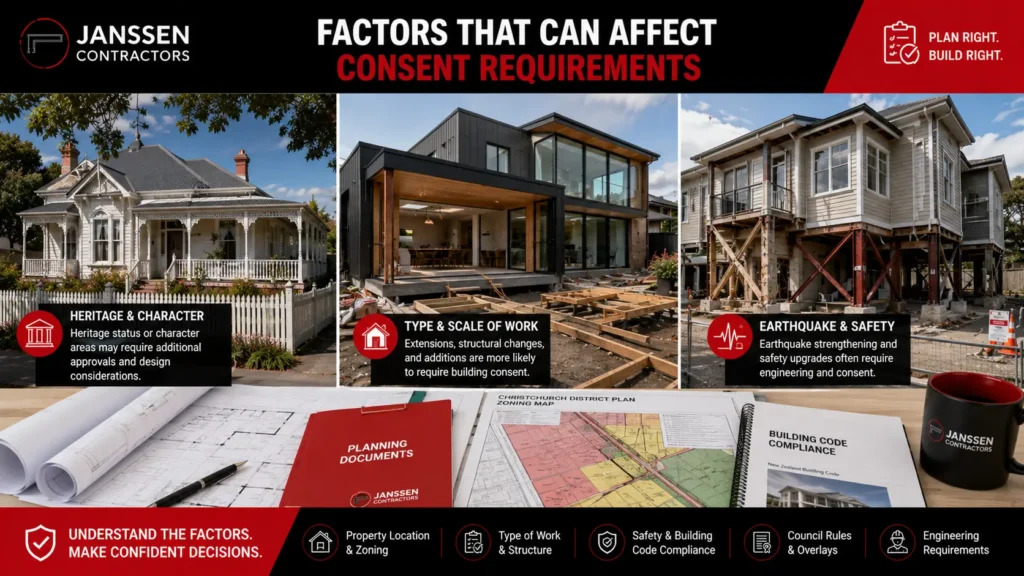
Factors That Can Affect Consent Requirements
Consent requirements are not always based on the renovation type alone. In Christchurch, the age, location, structure, zoning, and condition of a property can all influence whether building consent, resource consent, or extra professional advice is needed before work begins.
Heritage and Character Homes in Christchurch
Heritage and character homes often need closer review before renovation work starts. Even changes that seem minor can affect protected features, street appearance, or the historic value of the property.
- Protected Features: Some homes may have original façades, windows, rooflines, verandas, or decorative details that need to be preserved.
- Council Requirements: Christchurch City Council may require additional approvals if the property is listed as a heritage building or located in a character area.
- Renovation Planning: Homeowners should check property records early, especially before altering external walls, replacing original materials, or changing visible design features.
- Professional Advice: Working with a renovation specialist, architect, or heritage-experienced builder can help ensure the project respects preservation requirements while still improving the home.
Earthquake-Related Building Considerations
Christchurch has unique earthquake-related building considerations because many homes were affected by past seismic activity. This can influence renovation planning, structural assessments, and building-consent requirements.
- Structural Integrity: Renovations involving foundations, load-bearing walls, chimneys, bracing, or framing may need careful assessment to confirm the home is safe and compliant.
- Previous Damage: Some properties may have repaired or hidden earthquake-related damage, which can affect future renovation work.
- Strengthening Work: If a renovation exposes structural weaknesses, additional strengthening may be required before the project can continue.
- Engineering Input: Larger renovations may need input from a qualified engineer, especially when changes affect the building’s stability, load paths, or foundation system.
Property Zoning and Local Regulations
Local planning rules can also affect whether a renovation is straightforward or requires extra approval. Even if the building work itself appears simple, zoning rules may influence what can be built, where it can be placed, and how large the finished structure can be.
- Site Coverage: Christchurch properties may have limits on how much of the land can be covered by buildings, decks, garages, or extensions.
- Height Restrictions: Additions, second-storey renovations, and roofline changes may need to comply with local height limits.
- Boundary Setbacks: Renovations close to neighbouring properties often need careful checking to ensure they meet setback rules.
- Resource Consent: Some projects may not only need building consent but also resource consent if they affect land-use rules, privacy, sunlight access, or neighbourhood character.
Before starting a renovation in Christchurch, it is worth checking these factors early so you can avoid delays, redesign costs, and compliance issues later. A well-planned renovation is easier to manage, safer to complete, and more likely to protect the long-term value of your home.
How To Determine Whether Your Renovation Needs Consent
Knowing whether your renovation needs building consent can save you from costly rework, council delays, insurance issues, and future property-sale problems. In Christchurch, the safest approach is to assess the exact scope of work before construction starts, because consent requirements can change depending on the structure, plumbing, drainage, safety risk, and site-specific conditions involved.
Reviewing MBIE Guidance And Exemptions
MBIE provides official guidance on building work that may not require building consent under Schedule 1 of the Building Act 2004. This is the best starting point for Christchurch homeowners because it explains which types of low-risk building work may be exempt and what conditions still need to be met.
A common mistake is assuming that exempt work means there are no rules. Even when building consent is not required, the work must still comply with the New Zealand Building Code and any other relevant legal requirements. For example, simple cosmetic updates such as painting, replacing floor coverings, or changing kitchen cabinetry may not need consent, but work involving structural changes, sanitary plumbing, drainage, fire safety, or weathertightness can quickly move into consent-required territory.
Exemptions may apply when the work is genuinely low risk, completed within the limits of the exemption, and carried out by the right person where required. Some renovation tasks may also need a licensed building practitioner, plumber, drainlayer, or other qualified professional, even if a full building-consent application is not needed.
- Low-risk work: Some repair, maintenance, and replacement work may be exempt if it does not affect the building’s safety, structure, or compliance performance.
- Code-compliant work: Exempt building work must still meet the Building Code, so quality materials, correct installation, and safe workmanship remain essential.
- Project-specific limits: Height, size, location, structural impact, and use of the space can all affect whether an exemption applies.
- Documentation value: Keeping photos, invoices, plans, and professional advice can help protect your property records if questions arise later.
For homeowners asking do you need building consent for renovation Christchurch, MBIE guidance is useful because it helps separate minor home improvements from work that needs formal approval. However, it should be used carefully, because exemptions are specific and should not be stretched to fit work that is more complex than it first appears.
Consulting Qualified Building Professionals
A qualified building professional can help you understand whether your renovation is simple cosmetic work, exempt building work, or consent-required construction. This is especially important when the project affects walls, foundations, wet areas, drainage, roofing, decks, fire safety, or the layout of a home.
Builders are often the first point of contact because they can assess the practical side of the renovation. An experienced builder may identify structural risks, hidden damage, moisture issues, or buildability concerns that are not obvious during early planning. For example, what appears to be a basic wall-removal project may involve load-bearing framing, bracing, electrical services, or ceiling-support changes.
Architects and architectural designers are useful when the renovation changes the shape, layout, use, or performance of the home. They can prepare consent-ready drawings, coordinate with engineers, and help ensure the design meets both Building Code requirements and the homeowner’s goals. This can be especially valuable for extensions, garage conversions, major internal reconfigurations, and renovations involving older Christchurch homes.
Building consultants can provide independent guidance when a project has compliance uncertainty. They may review the proposed work, identify likely consent triggers, and advise whether further council clarification is needed before moving forward.
- Builders: A builder can assess site conditions, construction complexity, and whether the proposed work may affect structural performance.
- Architects: An architect or designer can translate your renovation idea into clear plans that support consent applications and practical construction.
- Engineers: An engineer may be needed when work affects load-bearing walls, foundations, retaining elements, bracing, or other structural components.
- Building consultants: A consultant can help interpret compliance requirements and reduce the risk of starting work without the right approvals.
Professional input helps homeowners avoid guesswork. It also strengthens EEAT from a content and project perspective because advice is based on real-world building experience, technical knowledge, and compliance-aware decision-making.
Contacting Christchurch City Council
Christchurch City Council should be contacted when the renovation is unclear, high risk, unusual, or close to the boundary between exempt and consent-required work. Council guidance is especially helpful when the project involves structural changes, additions, decks, drainage, heritage considerations, natural-hazard areas, or work that may also require resource consent.
Getting clarification directly from the council can prevent expensive mistakes. If a homeowner begins work believing consent is not required and the council later determines that it was, the project may face delays, additional inspections, retrospective documentation, or a certificate-of-acceptance process. These issues can be stressful and may affect future insurance claims or property-sale due diligence.
Council advice can also help confirm whether an exemption application is appropriate. In some cases, the Building Act allows certain work to be considered for an exemption from building consent, but this should be handled properly rather than assumed. Christchurch City Council provides online pathways for building-consent applications and exemption-related requests, making it easier to get the right process started before work begins.
- Direct clarification: Contacting the council helps confirm whether your specific renovation needs building consent, an exemption, or further documentation.
- Property-file protection: Official advice and proper records can help future buyers, insurers, and valuers understand what work was completed.
- Reduced compliance risk: Early council guidance can prevent avoidable rework, delays, and enforcement issues.
- Better project planning: Knowing the consent pathway early helps homeowners plan realistic timelines, budgets, and construction stages.
For Christchurch renovations, the best approach is to check MBIE guidance first, speak with qualified professionals, and contact Christchurch City Council when there is any uncertainty. This creates a practical decision-making process that protects your home, supports legal compliance, and gives you more confidence before renovation work begins.
Taking time to confirm consent requirements early is one of the simplest ways to keep your renovation moving in the right direction. With the right advice, clear documentation, and a compliance-first plan, you can avoid unnecessary stress and make better decisions for your Christchurch home.

Common Mistakes Homeowners Make During Renovation Projects
Renovation projects can feel straightforward at the start, especially when the work looks small or familiar. However, many Christchurch homeowners run into problems because they misunderstand building consent requirements, rely on casual advice, or fail to keep proper records. Avoiding these common mistakes can save time, protect your property value, and help ensure your renovation meets the right compliance standards.
Assuming Small Projects Never Need Consent
One of the most common renovation mistakes is assuming that small-scale work is automatically exempt from building consent. While many cosmetic updates do not need approval, size alone does not determine whether consent is required. A minor-looking project can still affect structural safety, plumbing systems, waterproofing, fire safety, or weathertightness.
For example, replacing kitchen cabinets may be simple if the plumbing stays in the same place, but moving plumbing fixtures or altering drainage can change the consent requirements. The same applies to bathroom renovations. New tiles, fittings, or vanities may seem like basic upgrades, but waterproofing work and changes to plumbing layouts may need closer review. Removing part of a wall can also be risky if the wall supports the structure above it.
Commonly overlooked requirements include:
- Load-bearing changes: Removing or altering a wall may require professional assessment if it supports the roof, ceiling, or upper floor.
- Plumbing alterations: Moving drains, showers, toilets, or other connected fixtures can trigger consent requirements.
- Waterproofing work: Wet-area renovations may need to meet specific building-code standards to prevent future leaks.
- Deck construction: A deck may require consent depending on its height, structure, access, and safety barriers.
- Garage conversions: Turning a garage into a living area may involve insulation, ventilation, fire-safety, and habitable-space rules.
A careful project assessment before work begins is always better than discovering a compliance issue halfway through the renovation.
Starting Work Before Approval Is Granted
Another serious mistake is beginning renovation work before building consent has been approved. Homeowners often do this because they want to keep the project moving, avoid delays, or assume approval will be granted later. In reality, starting too early can create expensive and stressful consequences.
If consent is required, the work should generally not begin until approval has been issued. Starting early may lead to stop-work notices, council enforcement, redesign costs, or the need to uncover completed work for inspection. This can be especially costly when structural framing, plumbing, or waterproofing has already been covered over.
The risks can include:
- Project delays: Work may need to stop until the correct approvals are obtained.
- Additional costs: Builders may need to redo, expose, or alter completed work to meet compliance requirements.
- Inspection problems: Council inspectors may not be able to verify work that has already been hidden behind walls, floors, or linings.
- Insurance issues: Unconsented renovation work may create complications if damage occurs later.
- Resale concerns: Future buyers may question whether the renovation was completed legally and safely.
Approval processes exist to confirm that renovation work meets the New Zealand Building Code and is suitable for the property. Waiting for the right consent may feel slower at first, but it often prevents larger problems later.
Relying On Informal Advice
Many homeowners ask friends, family members, neighbours, or online groups whether a renovation needs consent. While informal advice can be useful for general ideas, it should not be treated as a reliable compliance decision. Building consent requirements depend on the specific property, the exact scope of work, local conditions, and current regulations.
A neighbour may have completed a similar-looking renovation without consent, but that does not mean your project is exempt. Their home may have a different structure, layout, age, zoning position, or previous consent history. Christchurch properties can also have unique considerations because of earthquake-related repairs, land conditions, heritage features, and local planning requirements.
Professional guidance is important because qualified experts can assess the actual details of the renovation. A builder, designer, architect, engineer, or council adviser can help identify whether the work affects structural elements, drainage, weatherproofing, fire safety, or other compliance areas.
Reliable guidance may help with:
- Scope clarity: Professionals can separate cosmetic work from consent-related building work.
- Design accuracy: Proper plans can reduce the risk of rejected applications or council requests for more information.
- Compliance planning: Experienced renovation professionals can identify code-related issues early.
- Cost control: Getting the right advice before work starts can prevent expensive changes during construction.
- Safer outcomes: Professional input helps ensure the finished renovation is practical, durable, and legally compliant.
Informal advice should only be a starting point. For any renovation involving structural, plumbing, waterproofing, or safety-related work, it is better to confirm requirements through a qualified professional or Christchurch City Council.
Failing To Keep Documentation
Even when a renovation is completed correctly, poor record-keeping can create problems years later. Homeowners often forget to keep copies of consents, approved plans, inspection records, producer statements, warranties, and the Code Compliance Certificate. These documents can become very important when selling, refinancing, insuring, or making future changes to the property.
Good documentation shows that renovation work was planned, approved, inspected, and completed to the required standards. It gives future buyers, real-estate agents, insurers, lenders, and building professionals confidence that the work was handled properly. Without records, even compliant work can become difficult to verify.
Important renovation records may include:
- Building consent approval: Confirms that the planned building work was formally approved before construction.
- Approved plans: Shows what was permitted and how the work was intended to be completed.
- Inspection records: Provides evidence that key stages of construction were checked.
- Code Compliance Certificate: Confirms that the completed work meets the approved consent requirements.
- Professional reports: Engineering documents, producer statements, and specialist assessments can support structural or technical work.
- Product warranties: Useful for roofing, waterproofing, windows, cladding, fixtures, and other renovation materials.
Keeping these documents in a safe digital folder can make future property transactions much easier. It also protects homeowners if questions arise about whether the renovation was consented, inspected, or completed to an acceptable standard.
Renovation mistakes often happen because homeowners move too quickly or underestimate how important consent, advice, and documentation can be. By checking requirements early, working with qualified professionals, and keeping clear records, Christchurch homeowners can complete renovation projects with greater confidence and fewer long-term risks.

Benefits Of Working With Experienced Renovation Professionals
Renovation work can quickly become more complex than it first appears, especially when building consent, structural changes, council requirements, and long-term property value are involved. Working with experienced renovation professionals gives Christchurch homeowners a clearer path from planning to completion, helping them avoid costly mistakes while ensuring the finished work is safe, compliant, and built to last.
Navigating Consent Requirements Efficiently
Understanding whether a renovation needs building consent in Christchurch is not always straightforward. A small-looking change, such as removing an internal wall or altering plumbing in a bathroom, can have major compliance implications if it affects the structure, drainage, waterproofing, or safety of the home.
Experienced renovation professionals can review the proposed work early and identify whether building consent may be required before the project begins. This helps prevent situations where work starts too soon, only to be paused because council approval or additional documentation is needed.
- Avoiding delays: A knowledgeable renovation team can help confirm consent requirements, prepare the right documents, and coordinate with designers, engineers, or council staff when needed. This reduces the risk of application errors, missing information, or avoidable project hold-ups.
- Identifying compliance issues early: Professionals are trained to spot details that homeowners may miss, such as load-bearing walls, drainage changes, fire-safety requirements, insulation standards, and waterproofing concerns. Addressing these issues during the planning stage is usually faster and more cost-effective than fixing them after construction has started.
Improving Project Outcomes
A successful renovation is not only about how the space looks when it is finished. It also depends on how well the project is planned, how carefully the work is managed, and whether the finished result suits the home, budget, and long-term use of the property.
Experienced renovation professionals bring practical insight to the decision-making process. They can explain what is realistic, where costs may increase, and which design choices may create better value over time. This is especially important for kitchen renovations, bathroom upgrades, home extensions, garage conversions, and structural alterations where several trades may need to work together.
- Better planning: Professional planning helps align the design, budget, consent requirements, materials, and construction timeline before work begins. This gives homeowners a clearer understanding of what to expect and reduces the chance of rushed or reactive decisions.
- Reduced risk: Renovation work can involve hidden issues, such as old wiring, uneven framing, moisture damage, weak subfloors, or outdated plumbing. An experienced team knows how to manage these risks properly and can recommend practical solutions when unexpected problems appear.
- Professional oversight: Having qualified people oversee the work helps ensure each stage is completed correctly. This includes coordinating trades, checking workmanship, following approved plans, and maintaining quality-control standards throughout the renovation.
Ensuring Long-Term Compliance and Property Value
Renovations should improve how a home functions today while also protecting its value in the future. When work is not properly consented, documented, or completed to the right standard, it can create problems with insurance, refinancing, future repairs, and property sales.
Experienced renovation professionals understand that long-term compliance matters just as much as the immediate result. They can help ensure the work meets relevant building requirements, follows approved documentation where consent is needed, and supports the ongoing marketability of the property.
- Future-proofing renovations: A well-planned renovation considers how the home may be used in the years ahead. This may include improving layout, ventilation, moisture control, storage, accessibility, energy efficiency, and structural performance.
- Maintaining marketability: Buyers, agents, lenders, and insurers may ask questions about previous renovation work, especially if it involved structural changes, plumbing, extensions, or major alterations. Having the right approvals and records in place helps give future buyers more confidence and can make the property easier to sell.
Working with experienced renovation professionals gives homeowners more than practical support during construction. It provides confidence that the project has been properly considered, carefully planned, and completed with compliance, usability, and long-term value in mind.
Before starting your renovation, take the next step with confidence by speaking with a trusted renovation professional who understands Christchurch consent requirements, building standards, and practical project planning. Getting expert guidance early can help you avoid compliance issues, reduce delays, and make smarter decisions for your home improvement project.
References
- Exemptions From Building Consent | Christchurch City Council
https://portal.zero.govt.nz/0690ef3293449a51183263516d3a4f39/consents-and-licences/building-consents/before-you-build/exemption-from-building-consent - Building Consenting | Christchurch City Council
https://portal.zero.govt.nz/0690ef3293449a51183263516d3a4f39/consents-and-licences/building-consents - Do You Need a Building Consent? | Can I Build It NZ
https://www.canibuildit.govt.nz/ - Check If You Need Consents | Building Performance New Zealand
https://www.building.govt.nz/projects-and-consents/planning-a-successful-build/scope-and-design/check-if-you-need-consents - Building Consents in NZ Guide | Sonder Architecture
https://sonderarchitecture.co.nz/building-consents-in-nz/

FAQs: About Do You Need Building Consent For Renovation In Christchurch
Do all home renovations require building consent in Christchurch?
No, not all renovations require building consent. Cosmetic improvements such as painting, replacing flooring, or installing new cabinetry can often be completed without approval. However, structural changes, plumbing alterations, and certain building work may require consent.
How can I tell if my renovation needs building consent?
The best way to determine whether consent is required is to review New Zealand’s building work exemptions and consult qualified building professionals or Christchurch City Council. Requirements depend on the type, scale, and location of the work being completed.
Can I remove an internal wall without building consent?
It depends on whether the wall is load-bearing. Removing a non-structural wall may not require consent, but altering a load-bearing wall typically requires building consent and professional engineering input to ensure the home remains structurally sound.
Do kitchen renovations require building consent in Christchurch?
Most cosmetic kitchen renovations do not require consent. However, if the project involves structural changes, relocating plumbing, or modifying drainage systems, building consent may be necessary before work begins.
Do bathroom renovations require building consent?
Simple bathroom upgrades may not require consent, but significant plumbing alterations, waterproofing work, or structural modifications can trigger consent requirements. Each project should be assessed individually.
What happens if I renovate without the required building consent?
Completing consented work without approval can result in enforcement action, fines, additional costs, and difficulties obtaining insurance coverage. It may also create complications when selling the property in the future.
How long does building consent approval take in Christchurch?
Timeframes vary depending on the complexity of the project and the quality of the application. Straightforward applications may be processed relatively quickly, while larger or more complex projects can take longer due to additional assessments and information requests.
Can I apply for building consent myself?
Yes, homeowners can apply for building consent themselves. However, many people choose to work with architects, designers, builders, or consultants who understand the process and can help prepare accurate documentation.
Does a deck require building consent in Christchurch?
Some decks may be exempt from consent requirements, while others require approval depending on factors such as height, design, and structural considerations. It is important to verify the requirements before construction begins.
Can unconsented renovation work affect the sale of my property?
Yes, unconsented work can cause issues during property transactions. Buyers, lenders, and insurers often request evidence that renovations were completed legally and comply with applicable building regulations, making proper documentation extremely important.
Conclusion
Understanding building consent for renovation Christchurch is an important first-step before any home-improvement work begins, because consent requirements depend on the exact project, the property, and the type of building work involved. Cosmetic updates may be simple, but structural changes, plumbing alterations, extensions, waterproofing, and safety-related work often need closer review. Proper planning helps homeowners avoid costly delays, compliance issues, insurance problems, and future sale complications. Before starting your renovation, speak with experienced renovation specialists who understand Christchurch building requirements and can guide you through project planning, consent considerations, and practical renovation advice, so you can move forward with confidence and make well-informed decisions for your home.