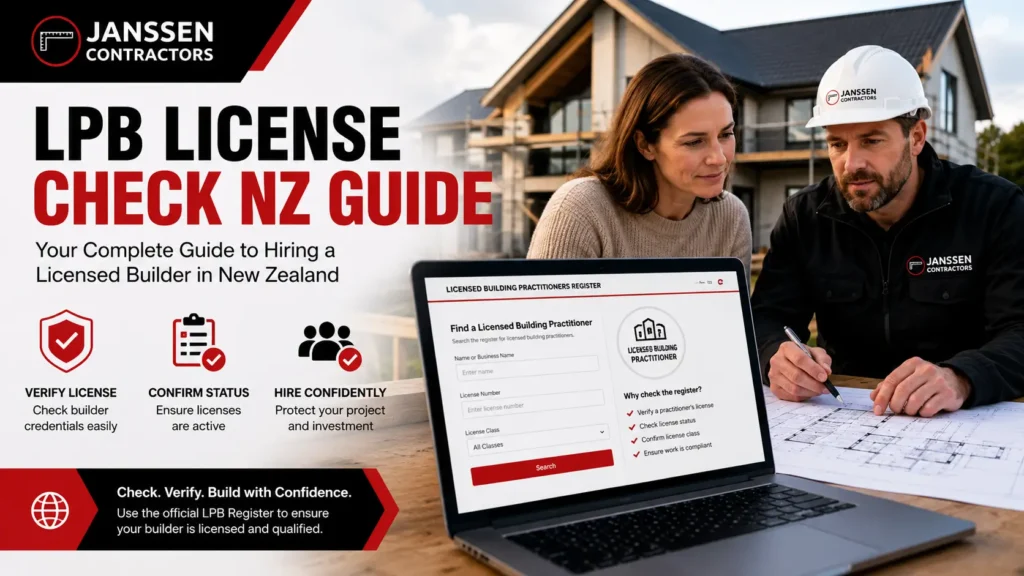
Welcome to our complete guide on performing an LPB license check in NZ. Whether you are planning a new build, renovation, extension, or repair project, verifying a builder’s Licensed Building Practitioner status is one of the most important steps you can take before hiring a contractor. An LPB license helps confirm that a practitioner has demonstrated the skills and knowledge required to carry out certain types of building work in New Zealand. In this guide, you will learn how to check a builder’s license, understand what the results mean, identify potential red flags, and make informed decisions that protect your investment, ensure compliance with building regulations, and give you greater confidence throughout your construction project.
An LPB license check in NZ allows you to verify whether a builder is a Licensed Building Practitioner through New Zealand’s official LPB Register. By searching a practitioner’s name or license number, you can confirm their license status, classification, and eligibility to perform restricted building work legally.
Table of Contents
What Is An LPB In New Zealand?
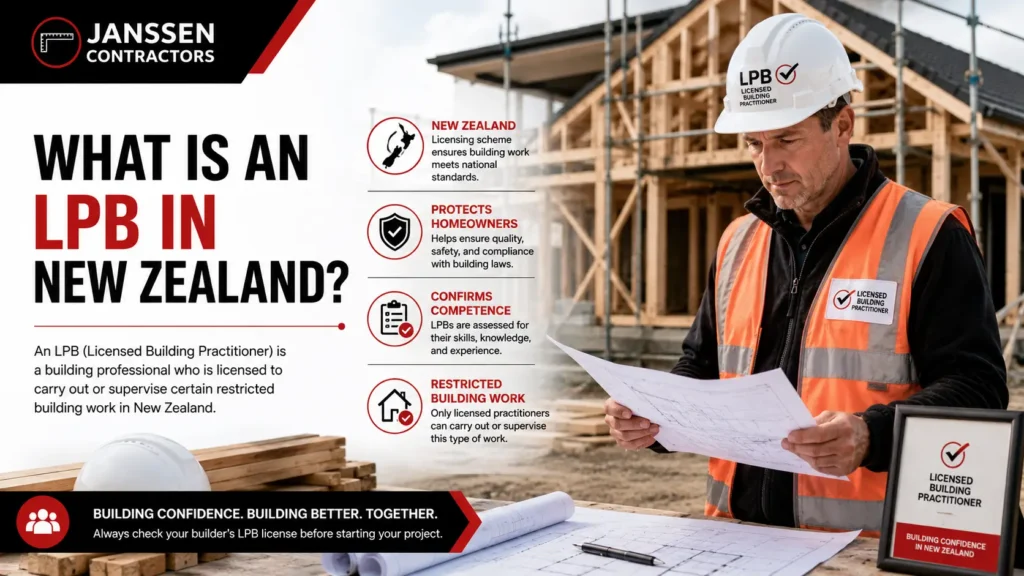
An LPB, or Licensed Building Practitioner, is a building professional who has been assessed as competent to carry out or supervise certain building work in New Zealand. This matters because some residential building work affects a home’s structure, weathertightness, or safety, and New Zealand law requires this type of restricted building work to be completed or supervised by the right licensed person. An LPB license check NZ helps homeowners confirm that the person they are hiring is properly licensed for the work they need completed.
Understanding The Licensed Building Practitioner (LPB) Scheme
The Licensed Building Practitioner scheme was created to help improve confidence in New Zealand’s building industry. Its main purpose is to assess and record building practitioners as having relevant skills and knowledge, then license them so they can carry out or supervise restricted building work. This gives homeowners a clearer way to check whether a builder, designer, roofer, or other practitioner has been formally recognised for specific building work.
The Ministry of Business, Innovation and Employment, often known as MBIE, plays an important role in supporting building regulation and consumer protection in New Zealand. Through the LBP system, homeowners can use the official public register to check a practitioner’s license status, license class, and relevant licensing history before making a hiring decision.
Licensing also helps maintain industry standards because an LBP must work within the scope of their license class. For example, a practitioner licensed for roofing should not present themselves as qualified to supervise restricted building work outside that license class. This protects the homeowner and helps keep projects aligned with New Zealand building requirements.
- Purpose of the scheme: The LBP scheme helps identify building practitioners who have been assessed as competent for specific types of building work.
- Role of MBIE: MBIE supports New Zealand’s building regulatory system and provides resources that help homeowners understand licensing, restricted building work, and practitioner responsibilities.
- Industry-standard support: Licensing creates clearer expectations for competency, accountability, and professional conduct across the building sector.
Types Of LPB Licenses
The LBP scheme includes seven licensing classes, each connected to work that can affect a building’s performance. These classes help homeowners understand whether a practitioner is licensed for the specific type of work involved in their project.
Carpentry is one of the most common LPB license classes. It often applies to practical building work involving the structural parts of a home, such as framing, wall systems, and other important construction elements. If your project involves major residential building work, checking whether the builder holds the right carpentry license is a sensible first step.
The site license class relates to supervising or managing building work on site. This can be especially important for larger projects where coordination, sequencing, and compliance oversight are needed. A site-licensed practitioner helps ensure that restricted building work is properly managed and completed by the right people.
The design license class applies to practitioners who prepare designs, plans, and specifications for restricted building work. This matters because the quality of the design affects how the project is consented, built, and inspected. Good design documentation can reduce confusion during construction and help councils assess compliance more clearly.
Foundations licensing covers foundation-related work such as concrete foundation walls, concrete slab-on-ground work, and pile foundations. Since foundations support the rest of the structure, this class is especially important for projects involving new homes, additions, or structural changes.
Roofing licensing applies to specific roofing systems, including areas such as profiled metal roofing, tile roofing, membrane roofing, and related roof-cladding work. Because roofing is closely tied to weathertightness, using a properly licensed practitioner can reduce the risk of leaks, moisture damage, and future repair costs.
Brick and block laying licensing covers work such as brick veneer and structural masonry. This type of work can affect both appearance and structural performance, depending on the project. A licensed practitioner should understand the materials, installation requirements, and limitations of the work they are carrying out.
External plastering licensing applies to exterior plaster systems, including solid plastering and proprietary plaster-cladding systems. This is important because poor exterior cladding or plaster work can contribute to weathertightness issues, especially when detailing, drainage, or installation methods are not handled correctly.
- Carpentry: Covers important structural-building tasks often involved in residential construction and renovation projects.
- Site: Supports proper on-site supervision and coordination of restricted building work.
- Design: Applies to practitioners who prepare plans and specifications for restricted building work.
- Foundations: Covers foundation-related work that supports the structural stability of a home.
- Roofing: Applies to roofing work connected to weather protection and building performance.
- Brick and Block Laying: Covers brick, block, and masonry work within the scope of the license.
- External Plastering: Applies to exterior plaster systems that can affect weathertightness and long-term durability.
Why LPB Licensing Matters
LPB licensing matters because it gives homeowners a practical way to check whether a person has been assessed for the type of work they are offering. While a license does not replace careful due diligence, it is an important starting point when choosing someone to work on your home. A proper LPB license check NZ can help you avoid hiring someone who may not be qualified to carry out or supervise restricted building work.
Licensing demonstrates competency by showing that a practitioner has met the requirements for a specific license class. This is different from simply saying they have experience. It means there is an official licensing framework behind their work, and that framework helps set expectations for skill, knowledge, and responsibility.
LPB licensing also protects homeowners by creating more transparency. Before you hire someone, you can check whether their license is current and whether their license class matches the work required. This is especially useful when comparing quotes, reviewing project roles, or deciding who should be responsible for restricted building work.
Another key benefit is compliance. Restricted building work must be carried out or supervised by an appropriately licensed practitioner. If the wrong person completes the work, it can create problems with building consent, inspections, records, and future property transactions. For homeowners, checking the license early can prevent stress later.
Quality workmanship is also closely connected to licensing. A licensed practitioner should understand the standards, methods, and responsibilities linked to their area of work. While you should still check reviews, references, insurance, and past projects, LPB licensing adds another layer of confidence when assessing whether someone is suitable for the job.
- Demonstrates competency: An LPB license shows that a practitioner has been assessed for a specific type of building work.
- Protects homeowners: Checking the license helps reduce the risk of hiring someone who is not properly qualified for restricted building work.
- Supports legal compliance: Using the right licensed practitioner helps keep the project aligned with New Zealand building requirements.
- Encourages quality workmanship: Licensing supports better standards by requiring practitioners to work within their approved license class.
Understanding what an LPB is can make the hiring process much clearer for homeowners. Before starting a new build, renovation, extension, or repair project, checking a practitioner’s license status gives you a stronger foundation for making a safe, informed, and confident decision.
Why You Should Perform An LPB License Check
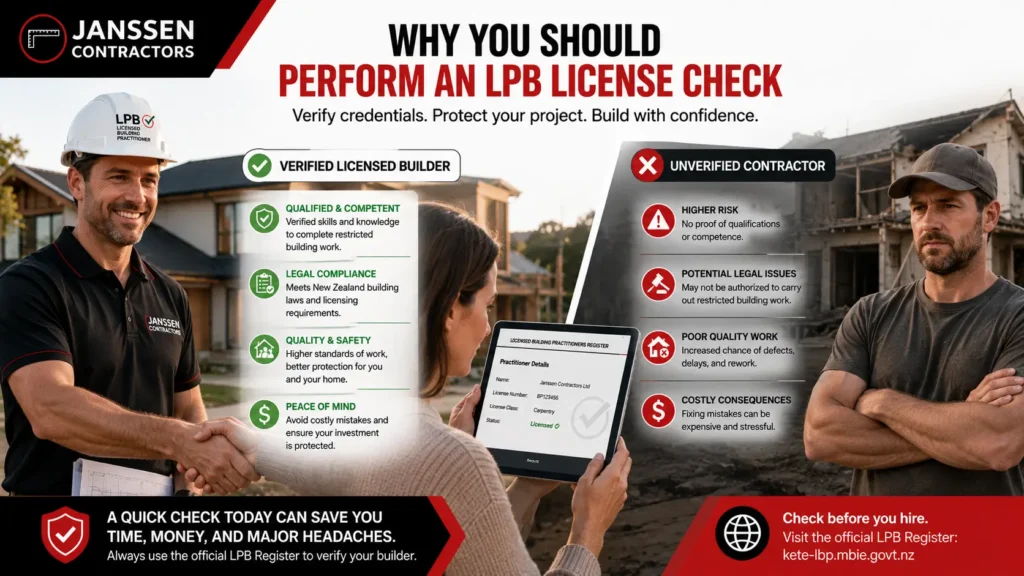
Before hiring someone for building work, an LPB license check gives you a practical way to confirm whether the person is properly licensed for the job. In New Zealand, this step is especially important when your project involves Restricted Building Work, because not every builder is legally allowed to complete or supervise that type of work. A quick check can help you avoid unnecessary risk, protect your property, and make a more informed decision before signing a contract.
Protecting Yourself From Unqualified Contractors
Hiring an unlicensed or unsuitable contractor can create serious problems that may not be obvious until much later. A builder may sound experienced, have a professional-looking website, or offer a lower price, but that does not always mean they are qualified to complete regulated building work. An LPB license check helps confirm whether the person has been assessed and licensed under New Zealand’s Licensed Building Practitioner scheme.
Unqualified contractors can put homeowners at risk in several ways. Poor structural work, incorrect installation, weak weather-tightness detailing, or failure to follow consented plans can lead to expensive defects. These issues may affect the safety, durability, and compliance of the home.
An LPB license check is not the only thing you should do before hiring a builder, but it is one of the most important first steps. It allows you to confirm basic licensing details before you go further with quotes, contracts, or deposits.
- License Confirmation: Checking the LPB Register helps you confirm whether the person is currently licensed and whether their license class matches the work required.
- Risk Reduction: Verifying licensing can reduce the chance of hiring someone who is not approved to carry out specific building tasks.
- Better Decision-Making: When you know a builder’s licensing status, you can compare contractors with more confidence instead of relying only on price or promises.
- Compliance Protection: Licensed practitioners are expected to understand the standards and responsibilities connected to regulated building work.
Ensuring Restricted Building Work Is Completed Legally
Restricted Building Work, often called RBW, refers to certain residential building work that affects the structure or weather-tightness of a home. This can include work on foundations, framing, roofing, external walls, and other key parts of a building. Because this type of work can affect safety and long-term performance, New Zealand law generally requires it to be carried out or supervised by a properly licensed building practitioner.
This is where an LPB license check becomes essential. It is not enough to assume that a builder is licensed because they work for a building company. LPB licenses are issued to individuals, not simply to businesses. That means the person doing or supervising the Restricted Building Work should have the correct license class for the job.
For example, a practitioner licensed in carpentry may not automatically be licensed for design work, roofing, or site supervision. Checking the license details helps you understand whether the practitioner’s qualifications match the actual work involved in your project.
- Restricted Building Work: RBW covers important parts of residential construction that can affect structural integrity and weather-tightness.
- Correct License Class: The practitioner should hold the right license category for the specific work being completed.
- Individual Responsibility: A company name alone is not enough, because the license belongs to the individual practitioner.
- Legal Compliance: Verifying the license helps ensure your project follows New Zealand building requirements before work begins.
Avoiding Costly Mistakes And Future Repairs
A proper LPB license check can also help you avoid costly mistakes that may only become visible after the work is finished. Poor workmanship can lead to leaks, cracks, drainage issues, structural movement, failed inspections, or problems when selling the property later. In many cases, fixing defective work costs far more than getting the right person involved from the start.
Price should never be the only factor when choosing a builder. A low quote may seem attractive, but it can become expensive if the contractor cuts corners, lacks the correct license, or does not understand the compliance requirements for the work. Taking time to check licensing, review experience, ask for references, and confirm insurance can save you from long-term stress.
Due diligence is especially important before signing a contract or paying a deposit. Once work has started, it can be much harder to resolve disputes, change contractors, or correct non-compliant work. A careful check at the beginning gives you more control and helps protect your investment.
- Financial Protection: Verifying a builder’s license can help prevent repair costs caused by poor or non-compliant work.
- Project Confidence: A licensed practitioner gives you more confidence that the work is being handled by someone with recognised competency.
- Contract Safety: Checking credentials before signing gives you a stronger position if you need to compare quotes or question project details.
- Long-Term Value: Compliant, well-completed building work protects the condition, safety, and resale value of your home.
Taking a few minutes to complete an LPB license check can save you from major problems later. It helps you choose a builder with more confidence, understand whether they are legally allowed to complete the work, and protect your home from avoidable defects, compliance issues, and unexpected repair costs.
How To Perform An LPB License Check NZ
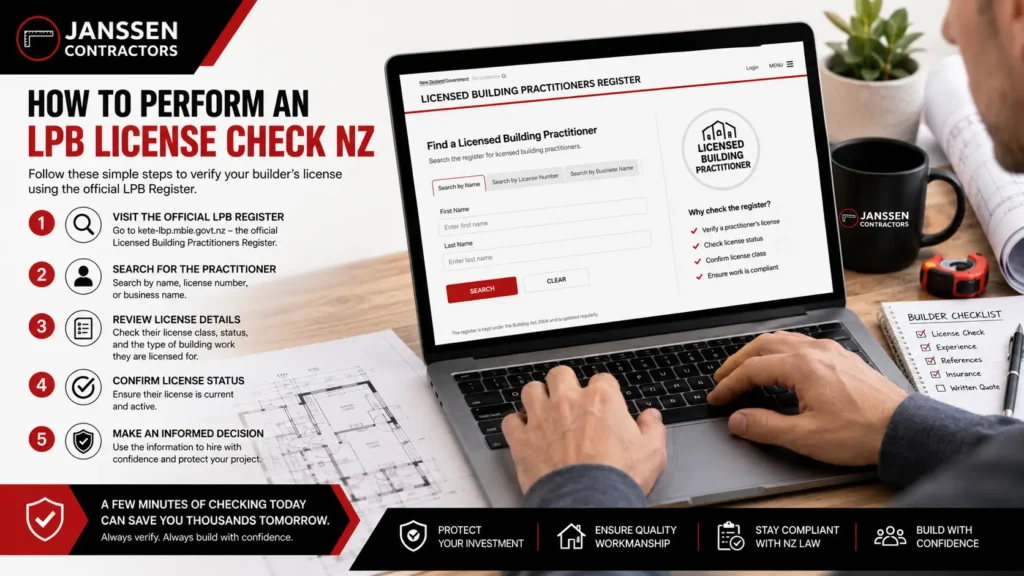
Performing an LPB license check NZ is a simple but important step before hiring someone for building work. The goal is to confirm that the person you are dealing with is a genuine Licensed Building Practitioner and that their license matches the type of work they will carry out or supervise. This helps protect your project, supports building-code compliance, and gives you more confidence before signing an agreement.
Using The Official Licensed Building Practitioner Register
The safest place to complete an LPB license check is the official Licensed Building Practitioner Register. This register is the trusted source for checking whether an individual is currently licensed under the Licensed Building Practitioner scheme in New Zealand. It is especially useful when you are planning restricted-building-work, such as structural work, roofing, foundation work, or work that affects a home’s weather-tightness.
The register allows homeowners, property owners, and project managers to verify important practitioner details before work begins. This is useful because an LPB license is attached to an individual person, not just the building company they work for. A business may promote itself as licensed, but you should still check the actual person responsible for carrying out or supervising the work.
The register can usually show details such as:
- Practitioner Name: This helps you confirm that the person you are speaking with matches the person listed in the register.
- License Number: This gives you a clear way to verify the practitioner and avoid confusion with similar names.
- License Class: This shows the type of work the practitioner is licensed to perform, such as carpentry, roofing, design, site, foundations, or brick-and-block-laying.
- Current Status: This helps you see whether the license is active, suspended, cancelled, or otherwise restricted.
- Licensing Details: This may include information about the practitioner’s licensing history, area of practice, or relevant limitations.
Using the official register is better than relying only on a verbal claim, website badge, or business-card statement. A quick check can help you avoid hiring someone who may not be properly licensed for the work you need.
Searching By Name, License Number, Or Location
When carrying out an LPB license check NZ, you can usually search the register using the practitioner’s name, license number, or location. The most accurate option is the license number because it directly connects to the licensed individual. If the builder has not provided one, ask for it before moving forward with your quote or contract.
A practical search process usually looks like this:
- Ask For The LPB Number: Request the practitioner’s full name and LPB license number before agreeing to any restricted-building-work.
- Enter The Details Carefully: Search using the license number first, then try the full name if needed.
- Check The Search Results: Make sure the name, license class, and location match the person or company you are dealing with.
- Confirm The License Class: Check that the license covers the actual work required for your project.
- Review The Current Status: Look for an active license and take note of any restrictions, suspensions, or unusual details.
- Save A Record: Keep a screenshot or written note of the license details with your project documents.
Searching by location can be helpful if you are checking local builders or trying to confirm whether a practitioner works in your area. However, location-based searching should not replace checking the person’s exact license details. Some builders travel between regions, and some businesses may have several staff members with different licensing classes.
If you cannot find the practitioner in the register, do not ignore it. Ask them to confirm the spelling of their registered name or provide their license number. If they still cannot be verified, treat it as a serious warning sign, especially if the work involves restricted-building-work.
Reviewing License Status And Classifications
Once you find the practitioner in the register, do more than simply confirm that their name appears. The most important part of an LPB license check is reviewing the license status and classification. A person may be listed in the register, but that does not always mean they are currently allowed to perform every type of building work.
An active license generally means the practitioner is currently licensed in the listed class. A suspended or cancelled license means you should not rely on that person for restricted-building-work unless their status has been properly resolved. If you are unsure what a status means, it is safer to seek clarification before allowing work to begin.
License classes are also important because different types of building work require different skills. For example, a practitioner licensed in roofing may not be licensed for carpentry, and a designer may not be licensed to carry out physical building work. This matters because restricted-building-work must be completed or supervised by someone with the right license class for the task.
You should also look for endorsements, conditions, or restrictions. These details may limit the type of work the practitioner can complete. For example, a license may apply to a specific area of practice or include conditions that affect how the practitioner can work. Reading these details carefully helps you avoid assuming that one license covers every part of your project.
Before hiring, compare the license information with your project scope. If your project includes structural framing, foundation work, roofing, or weather-tightness-related work, the practitioner’s license should match those requirements. This extra step can reduce compliance issues, protect your investment, and help ensure the work is completed by someone who is properly qualified.
Completing an LPB license check NZ only takes a few minutes, but it can save you from major stress later. By using the official register, checking the correct details, and reviewing the license status carefully, you can make a more informed decision before hiring a building practitioner.
What Information Can You Find During An LPB Check?
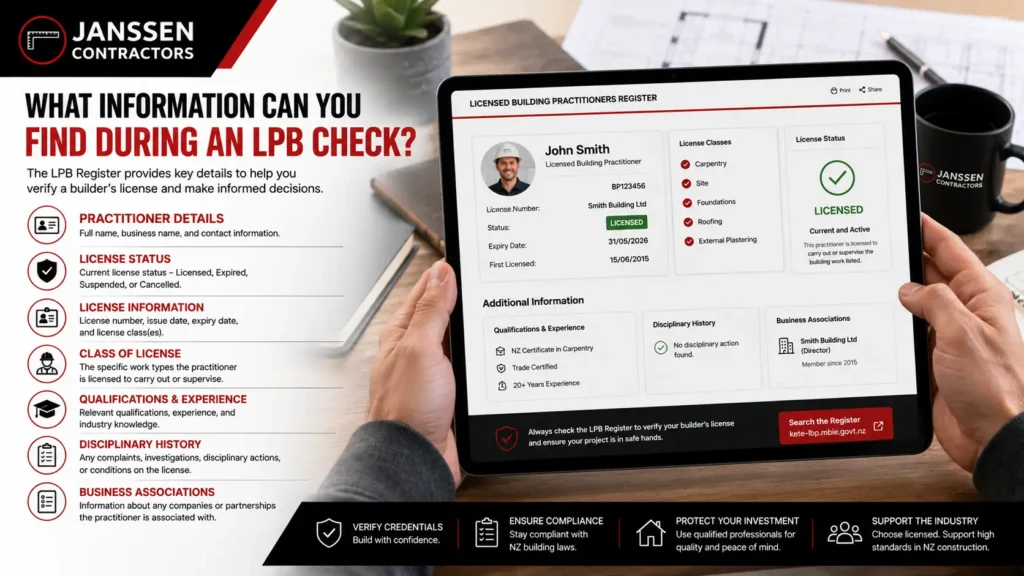
An LPB check gives homeowners a clearer view of who they may be hiring before any restricted-building work begins. The official LBP Register can help confirm whether a practitioner is licensed, what type of work they are licensed to do, and whether there are any details that need closer review. This is an important step because New Zealand restricted-building work must be designed or carried out by Licensed Building Practitioners with the right license class for the job.
Practitioner Details
The first thing you can confirm during an LPB license check is the practitioner’s basic identifying information. This helps you make sure the person you are speaking with is the same person listed on the official register, rather than relying only on a business name, quote, or verbal claim.
- Full Name: The register allows you to confirm the practitioner’s registered name, which is useful when checking that the person quoting or supervising the work is properly identified.
- Registration Details: These details help show that the practitioner is part of the Licensed Building Practitioner system and has met the required licensing standards for their area of work.
- License Number: The license number gives you a clear reference point when comparing details from the register with the information provided by the builder, designer, roofer, or other tradesperson.
This matters because an LPB license belongs to an individual, not simply to a company. A building business may advertise licensed services, but you still need to know which licensed person will carry out or supervise the restricted-building work.
Licensing History
An LPB check can also show important licensing information that helps you understand whether the practitioner is currently allowed to complete the type of work you need. This is especially important for structural work, weather-tightness work, design work, roofing, foundations, carpentry, and other areas covered by LPB license classes.
- Current License Status: A current license status helps confirm that the practitioner is actively licensed at the time of your search. This is worth checking before signing an agreement and again before major work starts.
- Renewal Information: Renewal details can help show whether the practitioner has kept their licensing up to date. Licensed Building Practitioners are expected to maintain their skills and knowledge, so current information is an important trust signal.
- Licensing Categories: License classes show the type of work the practitioner is licensed to do, such as carpentry, design, roofing, foundations, brick-and-block laying, external plastering, or site work.
A valid license does not automatically prove that someone is the best fit for your project, but it does confirm an important baseline. For example, a practitioner licensed in one class may not be licensed for another type of restricted-building work. That is why it is useful to check both the license status and the license class before making a hiring decision.
Disciplinary Records And Complaints
In some cases, an LPB check may also point to disciplinary information or professional-history details. This part of the process should not be skipped, because licensing is not only about qualifications. It is also about accountability, conduct, and whether the practitioner has met expected professional standards.
- Available Disciplinary Information: If disciplinary action has been recorded publicly, it may help you understand whether a practitioner has previously faced concerns about competence, negligence, conduct, or compliance.
- Complaint Context: Not every customer dispute becomes a formal disciplinary matter, so it is still sensible to ask for references, review previous work, and read customer feedback alongside the register check.
- Professional History: Looking at a practitioner’s history can help you spot possible red flags before work begins, especially if the project involves major structural work, weather-tightness risks, or a large financial commitment.
Reviewing disciplinary information is not about assuming the worst. It is about making a well-informed decision. If you find something concerning, ask direct questions, request clarification, and consider getting independent advice before moving forward. A trustworthy building professional should be comfortable explaining their license status, work history, and suitability for your project.
An LPB check is a simple step, but it can make a big difference when choosing the right person for building work in New Zealand. By reviewing practitioner details, licensing history, and any available disciplinary information, you can reduce risk, ask better questions, and feel more confident before hiring.
Understanding Restricted Building Work (RBW)
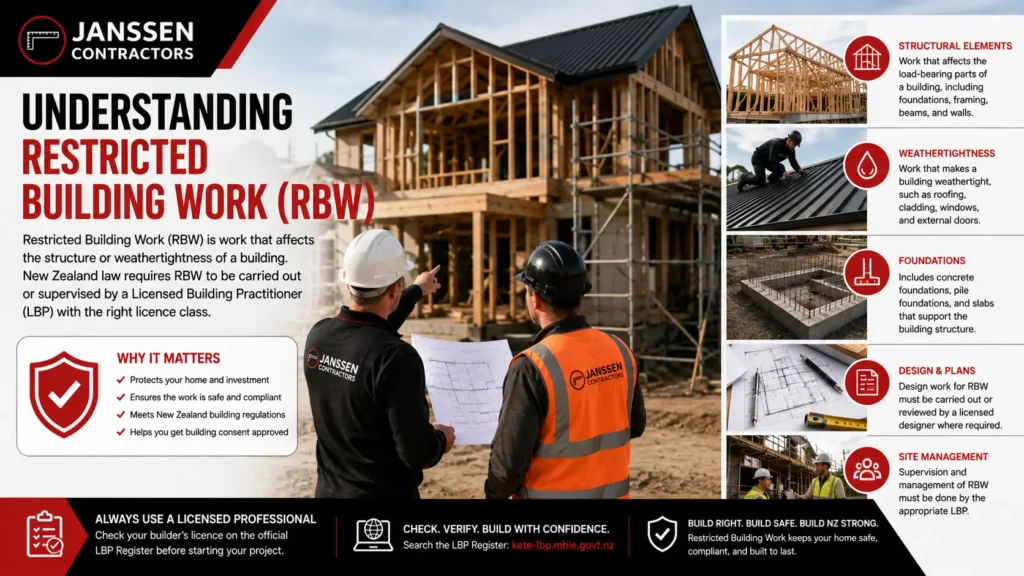
Restricted Building Work, often called RBW, is an important part of New Zealand’s building system because it protects the structural safety and weather-tightness of residential homes. If you are planning a new build, renovation, extension, roofing job, foundation project, or major alteration, understanding RBW can help you choose the right people, avoid compliance issues, and make sure your project is completed to the required standard.
What Qualifies as Restricted Building Work?
Restricted Building Work generally covers building or design work that affects the primary structure, weather-tightness, or certain fire-safety systems in residential buildings. This matters because these parts of a home are directly linked to safety, durability, and long-term performance. If work is done incorrectly, the damage may not appear straight away, but it can lead to serious problems such as leaks, movement, cracking, or failed council inspections later on.
- Structural Work: This includes work that helps the building resist vertical and horizontal loads, such as foundations, floors, walls, beams, framing, and roofs. For example, altering load-bearing walls or building new foundations is not simple cosmetic work because it can affect how the home supports weight and responds to movement.
- Weather-Tightness Systems: This covers work on the outside of the building that helps keep water and weather out. Roofing, cladding, external joinery, wall wraps, flashing details, and certain exterior plastering work can all affect the weather-tightness of a home, especially in New Zealand’s changing climate.
- Design-Related Work: Design work can also be restricted when it relates to structural elements or weather-tightness. Drawings, specifications, and consent documents need to clearly show how the building will comply with the New Zealand Building Code, which is why qualified design input is important before physical work begins.
Who Can Carry Out Restricted Building Work?
Restricted Building Work must usually be carried out or supervised by a properly licensed person. This is where a Licensed Building Practitioner, or LBP, becomes important. An LBP has been assessed as competent in a specific licence class, so homeowners should always check that the person doing or supervising the work is licensed for the correct type of work.
- Licensed Building Practitioners: LBPs can carry out or supervise restricted work within the scope of their licence class. For example, a carpentry LBP may be suitable for structural framing work, while a roofing LBP may be required for certain roof-installation tasks. The key point is that the licence must match the work being completed.
- Appropriate Licence Classes: Not every LBP is licensed for every type of restricted work. Before hiring someone, homeowners should complete an LPB license check NZ through the official register and confirm the practitioner’s current status, licence class, and relevant work history.
- Other Authorised Professionals: In some cases, other qualified professionals may be authorised to complete certain parts of the work. For example, registered architects and chartered professional engineers may be treated as LBPs for design-related restricted building work where applicable. This is why it is important to confirm the role, qualification, and responsibility of each person involved in the project.
Homeowner Responsibilities Under New Zealand Law
Homeowners have an important role in making sure restricted building work is handled properly. Even when a builder, designer, or project manager is involved, the property owner should understand the basic requirements before work starts. Taking time to check qualifications and keep accurate records can prevent delays, disputes, and compliance problems.
- Verifying Qualifications: Before agreeing to work, ask for the practitioner’s LBP number and check it against the official register. Do not rely only on a business name, website, or verbal assurance, because an LBP licence belongs to an individual practitioner rather than the company as a whole.
- Keeping Clear Records: Good record keeping helps protect homeowners during and after the project. Keep copies of contracts, quotes, plans, building-consent documents, inspection records, Certificates of Design Work, Records of Work, warranties, and written communication with contractors.
- Understanding Building Consent Requirements: Restricted Building Work is closely connected to the building-consent process. If your project requires consent, the council will usually need clear documentation showing who designed or carried out the restricted work and how the work complies with the Building Code.
- Checking Before Work Begins: It is better to confirm licensing, consent requirements, and project responsibilities before construction starts. Fixing compliance issues after work has been completed is usually more stressful, more expensive, and more time-consuming.
Understanding Restricted Building Work helps homeowners make safer, more informed choices before starting a building project. By checking the right licences, using properly qualified professionals, and keeping accurate project records, you can reduce risk and move forward with greater confidence.
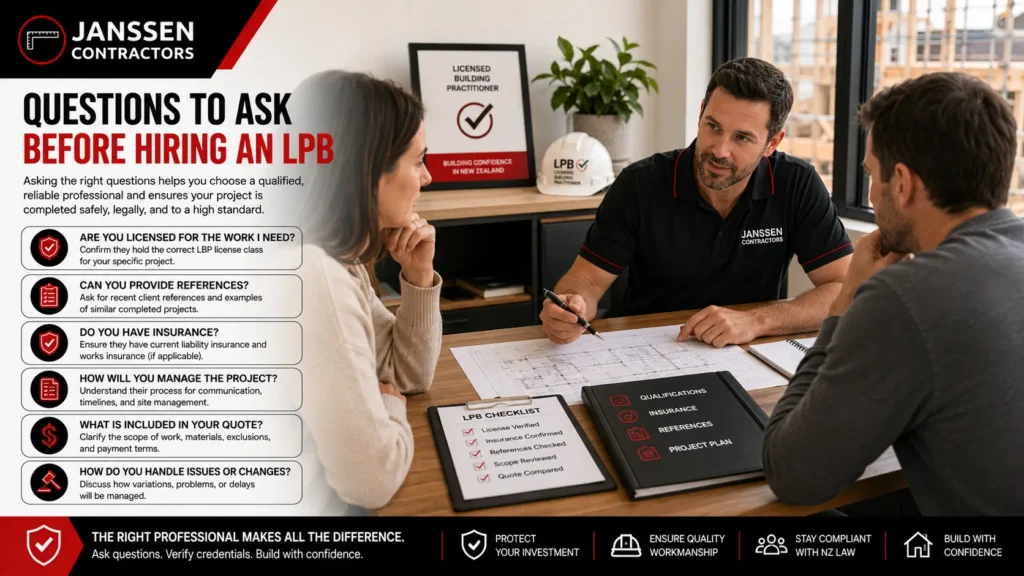
Questions To Ask Before Hiring An LPB
Before hiring a Licensed Building Practitioner, it is worth asking a few direct questions to confirm they are the right person for your project. An LPB license check NZ can verify their status, but good decision-making should also include reviewing their experience, insurance, references, and ability to explain the work clearly.
Can You Provide Your LPB Number?
A reliable Licensed Building Practitioner should have no issue giving you their LPB number before you agree to any building work. This number allows you to search the official LPB Register and confirm that their license is current, active, and suitable for the type of restricted building work involved in your project.
Checking the LPB number yourself is important because it helps you avoid relying only on verbal claims. Some homeowners assume that a building company is licensed, but LPB licensing applies to individual practitioners, not just the business name. The person carrying out or supervising restricted building work should be properly licensed for that specific role.
- License status: Confirm that the practitioner’s license is active and not suspended, cancelled, or expired.
- License class: Check whether their license matches the work required, such as carpentry, site, design, roofing, foundations, or another relevant category.
- Name match: Make sure the name on the LPB Register matches the person who will be responsible for the work.
- Project relevance: Ask how their license applies to your specific project, especially if structural or weather-tightness work is involved.
What Relevant Experience Do You Have?
An LPB license is a strong starting point, but experience still matters. A practitioner may be licensed, yet not have much background in the exact type of project you are planning. Asking about relevant experience helps you understand whether they have handled similar jobs and whether they can identify common challenges before they become expensive problems.
For example, a builder who regularly completes home renovations may understand the hidden issues that can appear once walls, floors, or roofing areas are opened up. A practitioner with local experience may also be more familiar with regional council requirements, weather conditions, soil types, access issues, and common construction risks in your area.
- Similar projects: Ask whether they have completed work similar to yours in size, style, and complexity.
- Local knowledge: Choose someone who understands local building conditions, consent processes, and practical site challenges.
- Problem-solving ability: Ask how they usually handle unexpected issues, such as water damage, framing defects, or design changes.
- Clear communication: A good practitioner should be able to explain the process, timeline, and likely risks in plain language.
Are You Insured And Able To Provide References?
Before hiring an LPB, ask whether they carry suitable insurance and can provide references from previous clients. Public liability insurance is especially important because it may help protect against accidental damage connected to the work. While insurance does not replace careful planning or quality workmanship, it adds another layer of protection for both the homeowner and the practitioner.
References and project examples also help you see how the builder performs in real situations. Look for feedback about communication, punctuality, workmanship, site cleanliness, budget management, and how they handled issues during the project. A confident, experienced practitioner should be comfortable showing previous work or connecting you with past customers where appropriate.
- Public liability insurance: Ask for confirmation that they hold current insurance suitable for the type of work being completed.
- Customer testimonials: Review feedback from previous clients to understand their reliability, communication, and work quality.
- Previous project examples: Request photos, case studies, or addresses of completed work where suitable and privacy allows.
- Written documentation: Make sure quotes, scope of work, timelines, and responsibilities are clearly recorded before work begins.
Taking time to ask these questions helps you move beyond a basic license check and make a more informed hiring decision. The right LPB should be qualified, experienced, transparent, and willing to provide the details you need to feel confident before your building project starts.Here is the completed section:
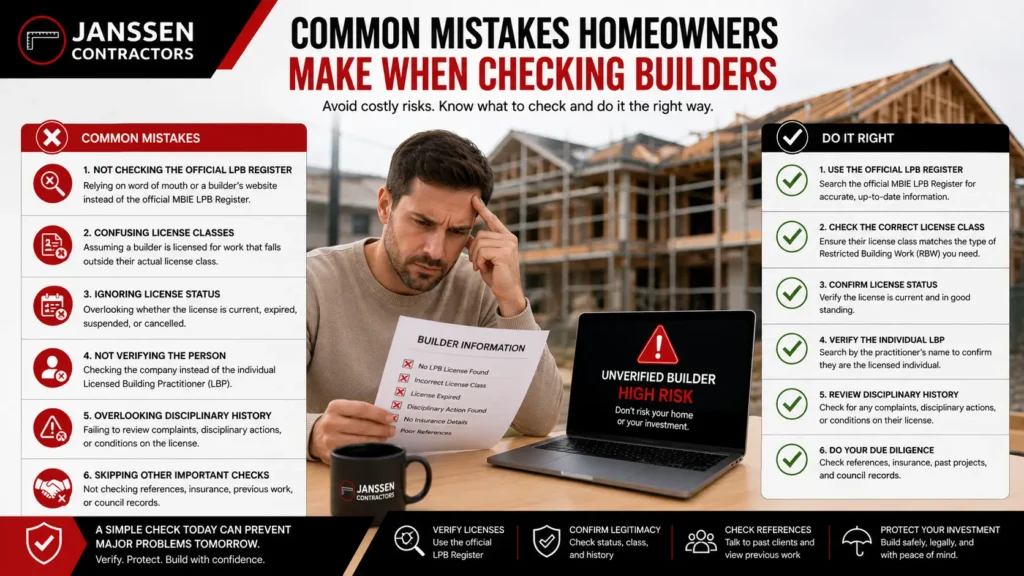
Common Mistakes Homeowners Make When Checking Builders
Checking a builder before starting a project is one of the simplest ways to reduce risk, but many homeowners only do a surface-level check. An LPB license check in NZ is helpful, but it needs to be done properly. The goal is not just to confirm that someone appears qualified, but to understand whether the right person is licensed, currently active, and experienced enough for the specific type of building work involved.
Assuming a Business Is Licensed Instead of the Individual
One common mistake is assuming that a building company is licensed just because it presents itself as professional. In New Zealand, an LPB license belongs to an individual practitioner, not the business name, brand, or company website. This means the person carrying out or supervising restricted building work should be the one with the correct license class.
A company may employ several workers, but not all of them may be Licensed Building Practitioners. Before agreeing to work, ask who will be responsible for the restricted building work and check that person’s name or license number on the official LPB Register. This helps you confirm that the right individual is qualified for the job, rather than relying only on the company’s reputation.
- Individual Licensing: The LPB license is attached to a specific person, so homeowners should check the actual builder or supervisor involved in the project.
- Company Assumptions: A professional-looking business does not automatically mean every worker is licensed for restricted building work.
- Project Responsibility: Homeowners should ask who will sign off or supervise the licensed building work before the project begins.
Failing to Verify Current License Status
Another mistake is checking a builder once and assuming the information will always stay the same. License status can change, so it is important to confirm that the practitioner’s license is current before work starts. An active license gives you more confidence that the builder is presently recognised under the Licensed Building Practitioner scheme.
When doing an LPB license check NZ homeowners should look carefully at the current license status, license class, and any relevant details shown on the register. A past license or old marketing claim is not enough. If the license is suspended, expired, cancelled, or does not match the type of work required, that should be treated as a serious warning sign.
- Active Status: Always confirm that the license is current, not expired or inactive.
- Correct License Class: Make sure the practitioner is licensed for the specific type of work involved, such as carpentry, roofing, foundations, or design.
- Updated Verification: Check the register close to the start date of the project so you are working with current information.
Not Reviewing Experience Beyond Licensing
An LPB license is important, but it should not be the only factor used when choosing a builder. Licensing confirms that a practitioner has met certain competency requirements, but it does not tell you everything about their workmanship, communication, reliability, or experience with similar projects. A builder may be licensed and still not be the best fit for your specific job.
Homeowners should combine the license check with practical due diligence. Ask about similar completed projects, request references, look at recent work, and compare the scope of the quote carefully. This is especially important for larger renovations, structural work, or projects where poor planning could lead to costly delays or future repairs.
- Relevant Experience: Choose a builder who has completed similar projects, not just someone who holds a general license.
- Work Quality: Review photos, case studies, testimonials, or references to understand the standard of previous work.
- Clear Communication: A reliable builder should explain the process, timeline, materials, and responsibilities in plain language.
- Written Scope: A detailed quote or contract helps prevent confusion about what is included, what is excluded, and how changes will be handled.
Taking time to check the right person, confirm their current license status, and review their real-world experience can help homeowners make a safer, more informed decision. A proper LPB license check is not just a formality. It is an important step toward protecting your home, your budget, and the quality of your building project.
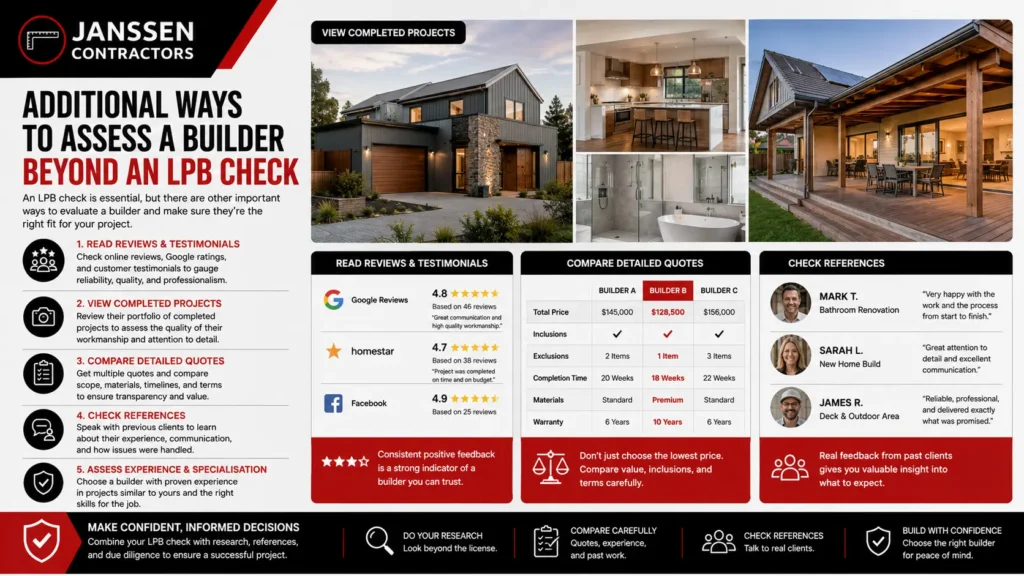
Additional Ways To Assess A Builder Beyond An LPB Check
An LPB license check in NZ is an important first step, but it should not be the only step when choosing a builder. A current license helps confirm that a practitioner is legally recognised for certain types of building work, but it does not tell the full story about workmanship, communication, reliability, or how well the builder manages real-world projects. To make a confident hiring decision, it is worth looking at past work, customer feedback, and the details included in each quote.
Reviewing Past Projects And Portfolios
A builder’s past projects can tell you a lot about their skill level, attention to detail, and experience with the type of work you need completed. When reviewing a portfolio, look beyond attractive photos and consider whether the projects are similar in size, style, and complexity to your own. A builder who regularly completes home renovations, extensions, new builds, or structural work similar to your project is more likely to understand the planning, sequencing, and problem-solving required.
- Project Galleries: A well-presented project gallery can show the quality of a builder’s finished work, including craftsmanship, materials, design consistency, and site presentation. Look for clear images that show different stages or angles of the work rather than only polished final shots.
- Case Studies: Case studies are especially useful because they explain the problem, the building process, the challenges involved, and the final result. A detailed case study can show how the builder thinks, communicates, and solves practical construction issues.
- Relevant Experience: Choose a builder with proven experience in the type of work you need. For example, a builder with strong renovation experience may be better suited to working around existing structures, while a new-build specialist may be more experienced with full-project coordination.
- Work Quality: Pay attention to finishing details, material choices, layout, and whether the completed work looks durable and well-planned. Small details often reveal how carefully a builder approaches the entire job.
Checking Customer Reviews And Testimonials
Customer reviews help you understand what it is like to work with a builder from start to finish. While an LPB check can confirm licensing, reviews often reveal important details about communication, punctuality, cleanliness, problem-solving, and after-project support. A builder with strong customer feedback is more likely to provide a smoother experience and handle issues professionally if they arise.
- Independent Review Platforms: Look at reviews from neutral platforms where customers can leave honest feedback. Pay attention to repeated comments about reliability, workmanship, communication, and whether the final cost matched the original expectations.
- Local Recommendations: Recommendations from people in your area can be valuable because they are based on real local experience. Friends, neighbours, architects, property managers, or local community groups may know which builders have a strong reputation nearby.
- Detailed Testimonials: The most helpful testimonials explain what type of project was completed, how the builder handled the work, and whether the client would hire them again. Short comments like “great job” are positive, but detailed feedback gives stronger insight.
- Response To Issues: No building project is completely free from challenges. What matters is how the builder responds when unexpected problems come up, such as delays, supply changes, weather issues, or hidden structural concerns.
Comparing Quotes And Scope Of Work
Comparing quotes is not just about finding the lowest price. A cheaper quote may leave out important work, use lower-quality materials, or include vague allowances that can lead to extra costs later. A good quote should clearly explain what is included, what is excluded, what materials will be used, and how variations will be handled.
- Detailed Scope: A clear scope of work should describe the specific tasks, materials, labour, timelines, and responsibilities involved in the project. This helps prevent misunderstandings once work begins.
- Value Over Price: The best quote is not always the cheapest. A slightly higher quote may offer better materials, stronger project management, clearer communication, and fewer unexpected costs.
- Transparent Allowances: Check whether the quote includes estimated allowances for items such as fixtures, fittings, materials, or subcontractor work. Vague allowances can make a quote look cheaper at first but become expensive later.
- Written Inclusions And Exclusions: Ask for written confirmation of what is and is not included. This can help avoid disputes over site preparation, consent-related work, waste removal, finishing details, or additional repairs.
- Payment Terms: Review the payment schedule carefully. A professional builder should provide fair, staged-payment terms that match project progress rather than asking for large upfront payments without clear justification.
Taking time to review a builder’s past work, customer feedback, and quote details can help you make a safer and more informed decision. An LPB license check gives you a strong starting point, but these extra checks give you a clearer picture of the builder’s experience, professionalism, and suitability for your project.
Before choosing a builder for your next project, take the time to verify their qualifications and ensure they are properly licensed for the work you need completed. A quick LPB license check can help you avoid costly mistakes, reduce risk, and give you confidence that your project is in capable hands. Explore our expert resources and practical guidance to make informed decisions and move forward with your building project knowing you have done the right due diligence from the start.
References
- Practitioner Search | Kete Building Practitioner Register
https://kete-lbp.mbie.govt.nz/advanced-building-practitioner-search/ - Restricted Building Work New Zealand Guide
https://www.building.govt.nz/projects-and-consents/planning-a-successful-build/scope-and-design/choosing-the-right-people-for-your-type-of-building-work/use-licensed-professionals-for-restricted-building-work/restricted-building-work - Regulating Building Professionals and Practitioners | MBIE
https://www.mbie.govt.nz/building-and-energy/building/regulating-building-professionals-and-practitioners - LBP Licence Classes and Requirements
https://www.building.govt.nz/projects-and-consents/planning-a-successful-build/scope-and-design/choosing-the-right-people-for-your-type-of-building-work/use-licensed-professionals-for-restricted-building-work/restricted-building-work/lbp-licence-classes
FAQs: About LPB License Check In NZ
What is an LPB license check in NZ?
An LPB license check in NZ is a way to confirm whether a building practitioner is currently licensed. It helps homeowners verify if a builder is qualified to carry out certain types of restricted building work.
Where can I check an LPB license in New Zealand?
You can check an LPB license through the official Licensed Building Practitioner Register. The register allows you to search by name, license number, or other available practitioner details.
Why is checking an LPB license important?
Checking an LPB license helps protect you from hiring someone who is not properly qualified. It also gives you more confidence that your building work will meet New Zealand’s legal and quality standards.
What information does the LPB Register show?
The LPB Register usually shows the practitioner’s name, license number, license class, current status, and relevant licensing details. This helps you confirm whether they are licensed for the type of work you need.
Can a builder work without an LPB license?
A builder may complete some general building work without an LPB license, but restricted building work must usually be carried out or supervised by a properly licensed practitioner. Always check what rules apply to your project.
What is restricted building work?
Restricted building work is work that affects a home’s structure or weather-tightness. This can include certain design, construction, roofing, foundation, and external envelope work.
Is an LPB license the same as a business license?
No, an LPB license applies to an individual practitioner, not just the company they work for. You should check the license of the person responsible for carrying out or supervising the work.
What should I do if I cannot find a builder on the LPB Register?
If you cannot find a builder on the register, ask them to provide their correct license number or full registered name. If they still cannot be verified, consider it a warning sign before proceeding.
Does an LPB license guarantee good workmanship?
An LPB license shows that a practitioner has met licensing requirements, but it does not automatically guarantee perfect workmanship. You should still check reviews, past projects, references, insurance, and written quotes.
How often should I check a builder’s LPB license?
You should check a builder’s LPB license before hiring them and again before major work begins. License status can change, so confirming current details helps reduce risk.
Conclusion
Taking the time to complete an LPB license check in New Zealand is one of the simplest and most effective ways to protect yourself before starting any building project. Whether you are planning a new home, renovation, extension, or other residential building work, verifying a licensed building practitioner helps ensure the person carrying out the work has met the standards required under New Zealand’s licensing system. A builder license check can provide valuable information about a practitioner’s license status, area of expertise, and ability to perform restricted building work, giving homeowners greater confidence when making hiring decisions. Using the official LPB Register NZ or building practitioner register should be a standard part of checking a builder’s credentials, alongside reviewing references, previous projects, customer feedback, and relevant experience. It is also important to understand that licensing is only one part of the decision-making process, as factors such as communication, workmanship, insurance, and knowledge of building regulations New Zealand can significantly impact the success of a project. By conducting a thorough building practitioner search, confirming builder qualifications NZ, and ensuring compliance with construction compliance NZ requirements, homeowners can reduce risk and make more informed choices. Before hiring a builder in New Zealand, take a few minutes to verify their LPB status, review their experience, and confirm they are appropriately qualified for the work you need completed. This small step can help protect your investment, support home renovation compliance, and contribute to a smoother construction process that meets building industry standards NZ from start to finish.