Welcome to our practical guide on what a good budget is for a bathroom renovation, where you will learn how to set a realistic spending plan before work begins. Bathroom renovation costs can vary based on the size of the room, the amount of work required, labour rates, plumbing and electrical changes, fixtures, tiles, and your choice of finishes. Understanding these costs early can help you decide where to spend, where you can save, and how much to keep aside for unexpected work. This guide breaks down the main renovation costs, budget levels, common hidden expenses, and practical ways to control spending so you can plan your bathroom renovation with greater confidence.
A good budget for a bathroom renovation should cover labour, plumbing, electrical work, waterproofing, tiling, fixtures, finishes, and unexpected costs. The right amount depends on your bathroom size, existing condition, renovation scope, material choices, and local labour rates. Include a contingency fund to manage unforeseen repairs.
Table of Contents
How Much Should You Budget For A Bathroom Renovation?
A good bathroom renovation budget depends on what you want to change, the condition of the existing bathroom, and the standard of materials and finishes you choose. A cosmetic update can cost far less than a full bathroom renovation involving new waterproofing, plumbing, tiling, electrical work, and fixtures. Labour rates and material prices also vary by location, so it is more useful to think in terms of budget levels rather than relying on one fixed figure.
Budget Bathroom Renovation
A budget bathroom renovation usually focuses on improving the appearance and function of a bathroom without changing its basic layout. This approach works best when the existing plumbing, waterproofing, flooring, and major fixtures remain in serviceable condition.
Instead of removing everything, you can concentrate your spending on visible improvements that make a noticeable difference. Painting, replacing old tapware, installing a new mirror, updating lighting, changing cabinet hardware, or replacing selected fixtures can refresh the room without the cost of a complete rebuild.
- Existing layout: Keeping the toilet, shower, bath, and vanity in their current positions can reduce the amount of plumbing and construction work required.
- Cosmetic improvements: Fresh paint, new tapware, updated lighting, mirrors, and accessories can improve an older bathroom without extensive demolition.
- Selective replacement: Replace fixtures that are damaged, inefficient, or difficult to maintain rather than automatically replacing everything.
- Material choices: Standard-size fixtures and readily available products can help control costs compared with custom-made or premium options.
- Existing condition: A lower-cost renovation is more realistic when there are no significant leaks, waterproofing failures, structural problems, or outdated services that require repair.
Be careful not to confuse a low-cost renovation with cutting corners. Waterproofing, plumbing, electrical work, and other regulated or specialist work should still meet applicable requirements. Saving money on cosmetic choices is very different from compromising work that protects the bathroom from water damage or safety problems.
Mid-Range Bathroom Renovation
A mid-range bathroom renovation generally involves replacing most visible elements while creating a practical balance between cost, durability, and appearance. This level is often suitable for homeowners who have an ageing bathroom and want a substantial update without moving into custom or luxury specifications.
The scope may include a new vanity, toilet, shower, tapware, lighting, tiles, mirrors, storage, and other fixtures. Depending on the bathroom’s condition, the project may also involve demolition, new waterproofing, plumbing adjustments, electrical work, surface preparation, and professional tiling.
- Fixtures: Mid-range products can provide reliable performance and good warranties without the price attached to premium designer ranges.
- Tiling: Choosing durable tiles at a sensible price can leave more of the budget available for preparation, waterproofing, and professional installation.
- Vanity and storage: Standard or semi-custom cabinetry can improve storage while costing less than fully custom-built joinery.
- Professional labour: Plumbers, electricians, waterproofers, tilers, carpenters, and other trades can represent a substantial part of the overall bathroom renovation cost.
- Long-term value: Spending more on frequently used components, such as quality tapware and durable surfaces, may reduce maintenance and replacement costs later.
This budget level also gives you more flexibility to correct practical problems. For example, you might improve storage, replace an uncomfortable vanity, install better lighting, or improve ventilation while retaining the main plumbing locations.
High-End Bathroom Renovation
A high-end bathroom renovation typically involves premium materials, more complex construction, custom features, or significant changes to the existing room. The cost increases because you are paying not only for higher-priced products but also for the additional labour required to install detailed or custom elements correctly.
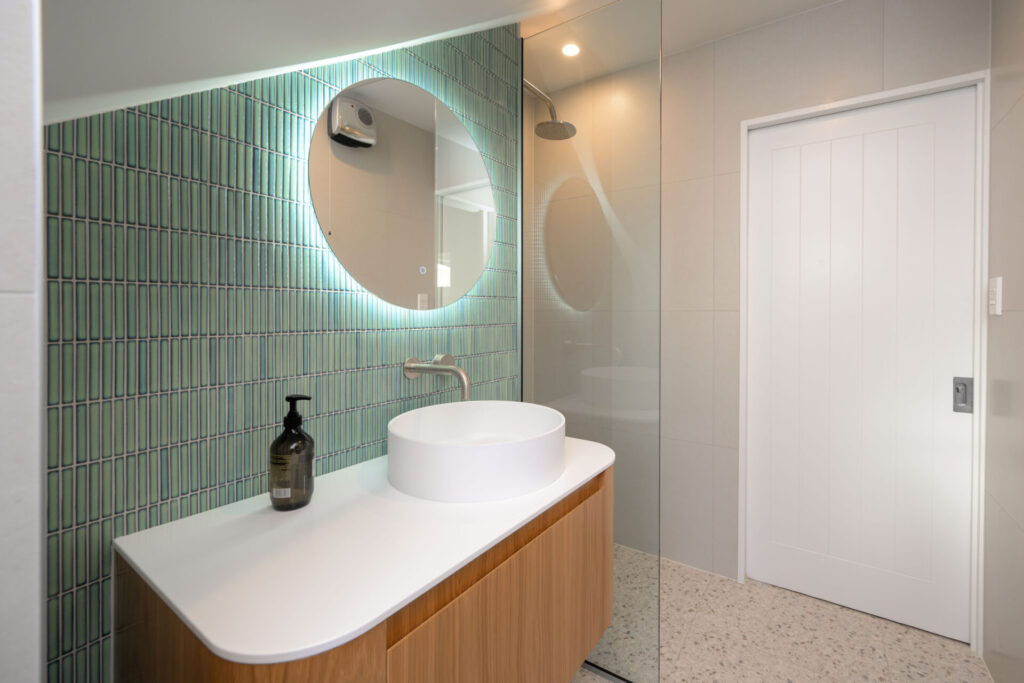
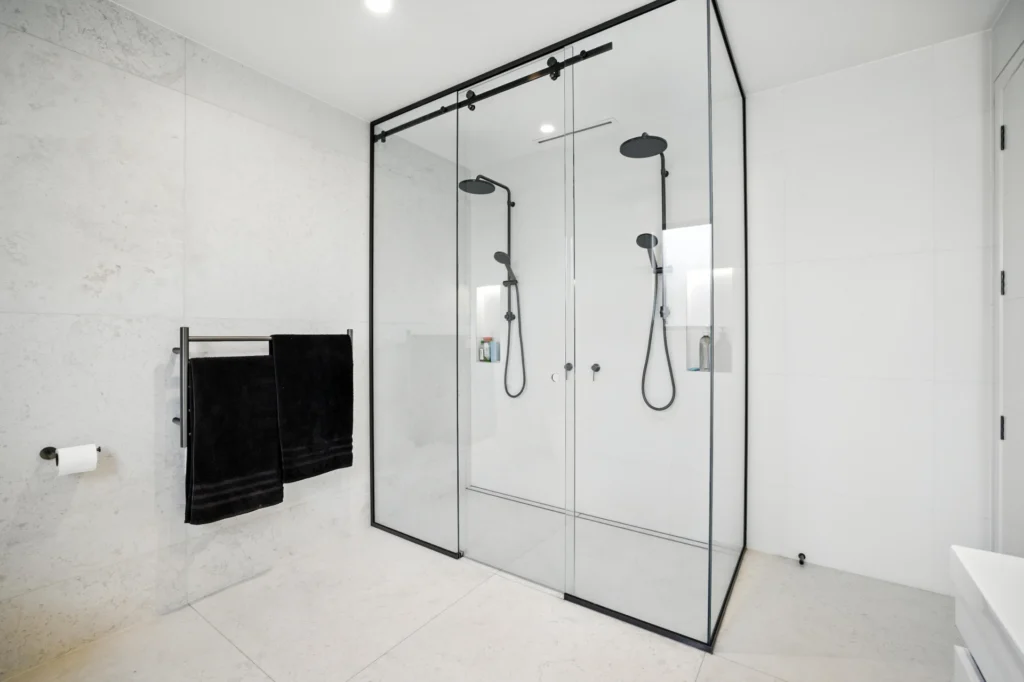
A high-end project might include custom-built cabinetry, natural-stone or premium tiles, frameless shower glass, designer tapware, freestanding baths, underfloor heating, feature lighting, recessed storage, or other tailored elements. Moving walls or relocating the toilet, shower, bath, or vanity can increase the scope further.
- Custom cabinetry: Made-to-measure vanities and storage can improve the use of space but require more design, manufacturing, and installation work.
- Premium materials: Natural stone, specialty tiles, higher-end tapware, and designer fixtures can increase both purchase and installation costs.
- Layout changes: Moving plumbing fixtures may require changes to drainage, water lines, floors, walls, and electrical services.
- Specialist trades: Complex tiling, custom glass, stone installation, detailed carpentry, and specialist electrical work can add significant labour costs.
- Structural work: Changing walls, doorways, floors, or other structural elements can increase the project scope before the visible bathroom finishes are installed.
The key with a high-end renovation is to budget for the complete project rather than focusing only on premium fixtures. A costly bath or vanity may be easy to price upfront, but demolition, preparation, plumbing, waterproofing, electrical work, installation, and specialist labour can account for a substantial share of the final bathroom renovation cost.
Whether you are planning a simple update, a mid-range remodel, or a high-end bathroom renovation, set your budget around the actual condition and scope of the room. Prioritising essential work first and allowing enough for professional labour and unexpected repairs can help you make informed choices without spending the entire budget on finishes alone.
What Determines The Cost Of A Bathroom Renovation?
Bathroom renovation costs depend on much more than the size of the room. The amount of demolition, condition of the existing bathroom, plumbing and electrical requirements, material choices, labour rates, and level of finish all affect the final price. This is why two bathrooms with similar dimensions can have very different renovation costs. A straightforward update that keeps the existing layout will usually require less work than a complete renovation involving relocated plumbing, new electrical services, extensive tiling, and custom-made fixtures.
Bathroom Size and Renovation Scope
Bathroom size affects the quantity of materials required and the amount of time needed to install them. A larger bathroom generally requires more flooring, wall tiles, waterproofing, grout, paint, and labour. The renovation scope can have an even greater effect on the overall bathroom renovation budget.
A small bathroom receiving a full strip-out may cost more than a larger bathroom undergoing a simple cosmetic update. Removing existing tiles, replacing damaged surfaces, installing new fixtures, and rebuilding wet areas involve several trades regardless of the floor area.
The amount of wall coverage also matters. Floor-to-ceiling tiling requires considerably more material and installation time than tiling only the main wet areas. Complex layouts, niches, steps, corners, and other detailed areas can increase cutting and preparation work.
Before setting your budget, clearly define whether you need a cosmetic update, partial renovation, or complete bathroom renovation. This gives contractors a more accurate scope to price and helps prevent unrealistic cost expectations.
Plumbing and Electrical Changes
Keeping plumbing fixtures in their existing locations can help control bathroom renovation costs. Moving a toilet, shower, bath, or vanity may require changes to water-supply lines, drainage pipes, walls, floors, and other surrounding surfaces.
Relocating a toilet can be particularly involved because the waste connection needs to suit the new position. Moving a shower or vanity may also require new pipework and additional wall or floor preparation. The actual cost depends on the building, existing services, access, and distance the plumbing needs to move.
Electrical requirements should also be planned before renovation work begins. A new bathroom may require work for lighting, power outlets, exhaust fans, heated towel rails, underfloor heating, mirrors, or other powered features. Changes to the layout can also affect where switches, outlets, and lighting need to be positioned.
Planning these requirements early allows the plumber and electrician to complete rough-in work before walls, floors, tiles, and fixtures are finished. It can also reduce the risk of costly changes later in the project.
Tiles, Fixtures, and Finishes
Product selection can change a bathroom renovation budget quickly. Tiles, tapware, vanities, toilets, shower screens, baths, basins, mirrors, cabinetry, and accessories are available across a wide range of price points.
Standard products can provide good function and durability without consuming a large part of the budget. Premium products may offer higher-grade materials, specialised finishes, custom dimensions, or design features, but they can increase both purchase and installation costs.
Tiles are a good example because the price per square metre is only one part of the total cost. Installation can also be affected by:
- Tile size: Very large-format tiles can require careful handling, cutting, surface preparation, and installation, while very small tiles may involve more detailed placement and grouting.
- Coverage area: Floor-to-ceiling tiling requires more material and labour than limiting tiles to floors and essential wet areas.
- Installation pattern: Detailed layouts and patterns can require additional cutting, measuring, and installation time.
- Surface condition: Uneven floors or walls may need preparation before waterproofing and tiling can begin.
- Custom features: Tiled niches, ledges, feature walls, and other detailed elements can increase both material and labour requirements.
Choose finishes as part of the overall bathroom renovation plan rather than selecting each item separately. This makes it easier to balance appearance, durability, maintenance needs, and cost.
Labour and Professional Services
Labour is a major part of most bathroom renovation budgets because the project usually involves several specialised trades. Depending on the renovation scope, you may need plumbers, electricians, tilers, waterproofing specialists, carpenters, painters, builders, glaziers, cabinetmakers, or other professionals.
Professional labour should be included in your initial budget rather than treated as an optional extra. Bathroom work often needs to happen in a specific sequence. Demolition and preparation come first, followed by rough-in services, structural or surface repairs, waterproofing, tiling, fixture installation, electrical fit-off, painting, and finishing work.
Experienced tradespeople also need time for work that may not be obvious in the finished bathroom. Correct surface preparation, accurate falls toward drains, waterproofing details, fixture positioning, plumbing connections, and electrical work all contribute to how well the bathroom performs after the renovation is complete.
When comparing bathroom renovation quotes, look beyond the total figure. Check which trades are included, what work each contractor is responsible for, which materials are supplied, and whether important preparation and installation tasks have been allowed for. A detailed quote makes it easier to understand where your money is going and reduces the chance of unexpected costs once work starts.
Bathroom renovation costs ultimately reflect the scope and complexity of the work, not simply the room’s dimensions. By planning the layout, plumbing, electrical requirements, materials, finishes, and professional labour together, you can build a more realistic budget and make informed choices about where your money will have the greatest practical value.
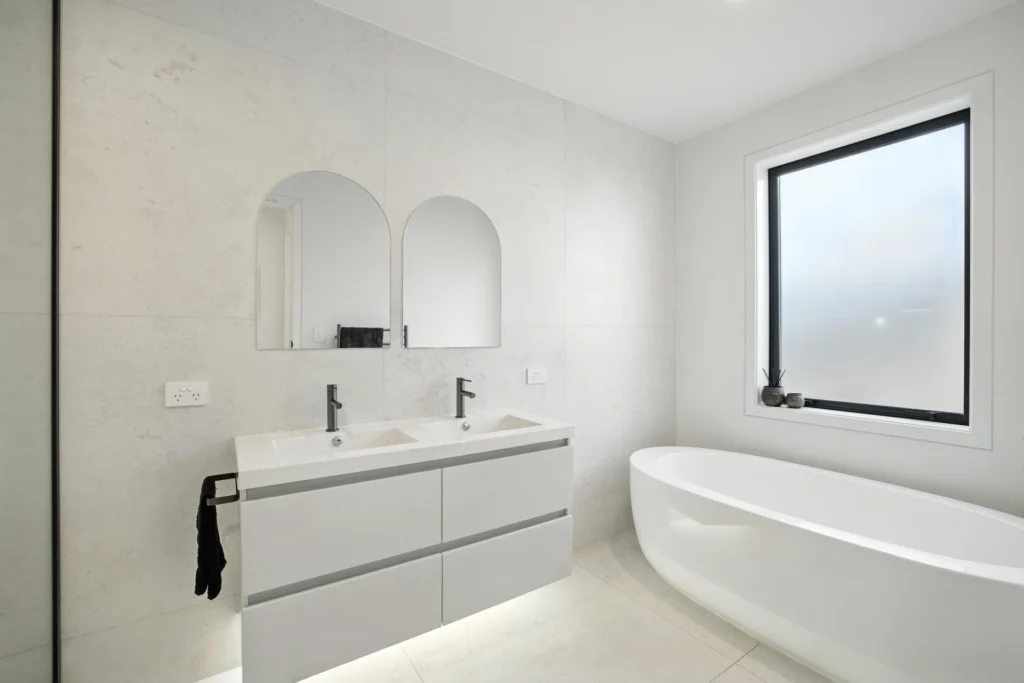
Where Does Your Bathroom Renovation Budget Go?
A bathroom renovation budget covers much more than the fixtures and finishes you see when the project is complete. A significant amount can go toward skilled labour, preparation, waterproofing, plumbing, electrical work, and other technical tasks. Exact costs and percentages vary depending on the bathroom size, existing condition, chosen materials, local labour rates, and whether the layout is changing. Understanding these major spending areas can help you set a realistic budget and decide where it makes sense to save.
Demolition and Site Preparation
Demolition is one of the first major stages of a bathroom renovation. It can involve removing the existing toilet, vanity, shower, bath, cabinetry, wall and floor tiles, mirrors, fittings, and other materials that will not remain in the renovated space.
Removal also creates waste that needs to be handled and disposed of correctly. Depending on the project, demolition costs may include labour, protective materials, waste containers, transport, and disposal fees.
The condition underneath the existing finishes is difficult to assess fully until demolition begins. Once tiles, flooring, or cabinetry are removed, contractors may discover water-damaged timber, uneven surfaces, deteriorated wall linings, old plumbing, or areas requiring additional preparation.
This is one reason homeowners should avoid budgeting for demolition as though it only involves removing old materials.
- Waste removal: Old tiles, plasterboard, cabinetry, fixtures, flooring, and packaging can create a considerable amount of renovation waste that needs to be removed from the property.
- Surface preparation: Walls and floors may require levelling, patching, cleaning, or replacement before waterproofing and new finishes can be installed.
- Hidden damage: Previous leaks or failed waterproofing may have affected areas that were not visible during the initial inspection.
- Access requirements: Bathrooms with restricted access can require more manual labour to move materials and waste in and out of the property.
Waterproofing, Plumbing, and Electrical Work
Some of the most important bathroom renovation costs are hidden once the room is finished. Waterproofing, plumbing, drainage, wiring, ventilation, and electrical connections may not have the visual impact of new tiles or a vanity, but they play a major role in how safely and reliably the bathroom performs.
Plumbing costs can increase when the renovation involves moving the toilet, shower, bath, or basin. Changing these locations may require new water-supply lines, drainage changes, floor work, and additional wall preparation. Keeping major fixtures close to their existing positions can sometimes reduce the amount of plumbing work required.
Electrical work can include new lighting, power outlets, exhaust fans, heated towel rails, underfloor heating, and connections for other bathroom features. The extent of this work depends on the existing electrical system and the planned design.
Waterproofing deserves particular attention because bathrooms are exposed to moisture every day. Correct surface preparation and waterproofing help protect surrounding building materials from water penetration and long-term damage.
- Waterproofing: Proper preparation and installation are important for protecting wet areas and reducing the risk of water-related damage.
- Plumbing: Costs depend heavily on the existing system and whether fixtures remain in their current locations.
- Electrical work: New lighting, ventilation, outlets, and powered fixtures can require additional wiring and electrical connections.
- Qualified trades: Plumbing, electrical, waterproofing, and other regulated work should meet the applicable requirements for the property’s location.
Saving money on decorative items is often easier to correct later than cutting costs on technical work hidden behind finished walls and floors.
Tiling and Flooring
Tiling can represent a substantial part of a bathroom renovation budget because the total cost includes much more than the tiles themselves. Surface preparation, waterproofing requirements, adhesives, grout, trims, cutting, installation, and finishing all contribute to the final price.
The amount of tiled surface also matters. Tiling only the necessary wet areas generally requires fewer materials and less installation time than covering every wall from floor to ceiling.
Tile selection can affect labour as well as material costs. Large-format tiles, mosaics, detailed patterns, niches, unusual layouts, and tiles requiring extensive cutting can take more time to install correctly. Bathrooms with uneven walls or floors may also need additional preparation before tiling can begin.
- Tile coverage: Floor-to-ceiling tiling increases the total surface area and can raise both material and installation costs.
- Tile choice: The purchase price is only one consideration because some tile formats require more cutting, preparation, or installation time.
- Surface condition: Uneven or damaged substrates may need additional work before new tiles can be installed.
- Finishing details: Grout, trims, edges, corners, niches, and transitions contribute to the finished result and should be included when estimating costs.
If you need to reduce your bathroom renovation cost, consider whether every wall needs premium floor-to-ceiling tiles. Using higher-priced tiles selectively can create the desired finish without applying the same material throughout the entire bathroom.
Bathroom Fixtures and Cabinetry
Fixtures and cabinetry are among the most visible parts of a bathroom renovation, and this category can vary widely in price. Your choices may include the toilet, shower, bath, vanity, basin, tapware, mirrors, storage, shower screens, towel rails, and related fittings.
It is easy to overspend in this area because individual upgrades can appear relatively small when considered separately. A more expensive tap, basin, mirror, shower fitting, and vanity can collectively add a significant amount to the total bathroom renovation budget.
Standard products can offer meaningful savings without necessarily reducing everyday function. For example, a well-made standard-size vanity may cost less than custom cabinetry while still providing suitable storage and durability. The same principle can apply to basins, toilets, mirrors, and tapware.
Focus first on how each item will perform in daily use.
- Vanity and storage: Choose cabinetry based on available space, storage needs, moisture resistance, and everyday use before paying extra for custom features.
- Tapware: Consider construction quality, warranty coverage, replacement parts, and compatibility rather than choosing products based on appearance alone.
- Toilet and basin: Standard models can provide the required function at a lower cost than premium designer options.
- Shower and bath: Size, screen configuration, tapware, drainage, and installation requirements can all influence the final cost.
- Mirrors and accessories: These items are easier to upgrade later, making them potential areas for savings when the initial budget is limited.
A balanced bathroom renovation budget gives priority to work that protects the room and supports reliable daily use before allocating extra money to premium finishes. Knowing how much is going toward demolition, preparation, technical work, tiling, fixtures, and cabinetry also makes it easier to compare quotes and adjust your choices without compromising the parts of the renovation that matter most.
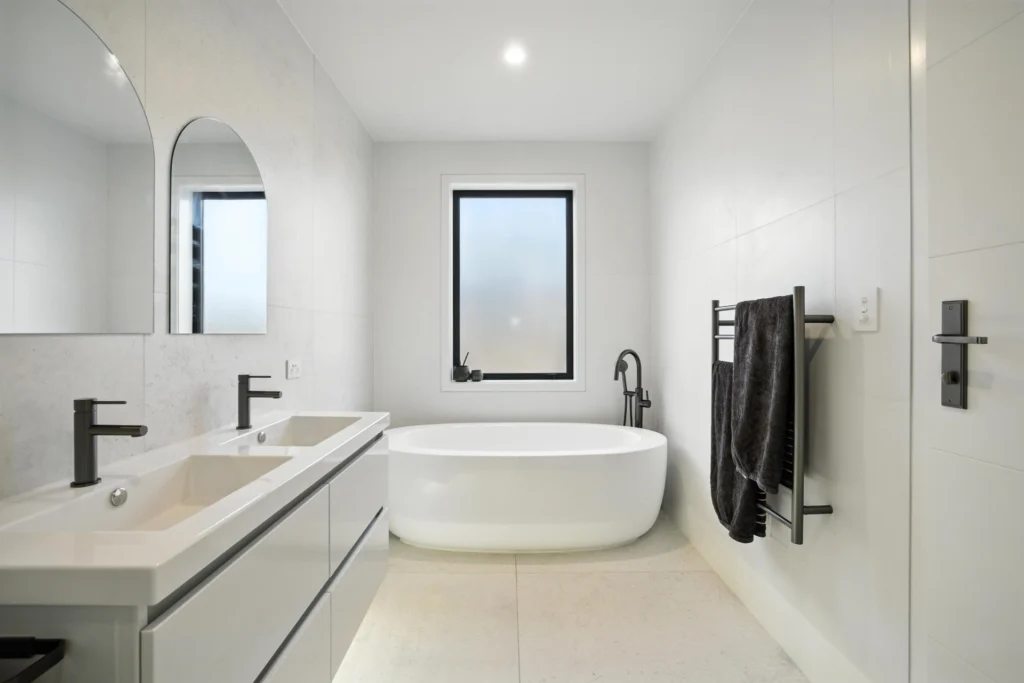
Where Does Your Bathroom Renovation Budget Go?
A bathroom renovation budget covers much more than the fixtures and finishes you see when the project is complete. A significant amount can go toward skilled labour, preparation, waterproofing, plumbing, electrical work, and other technical tasks. Exact costs and percentages vary depending on the bathroom size, existing condition, chosen materials, local labour rates, and whether the layout is changing. Understanding these major spending areas can help you set a realistic budget and decide where it makes sense to save.
Demolition and Site Preparation
Demolition is one of the first major stages of a bathroom renovation. It can involve removing the existing toilet, vanity, shower, bath, cabinetry, wall and floor tiles, mirrors, fittings, and other materials that will not remain in the renovated space.
Removal also creates waste that needs to be handled and disposed of correctly. Depending on the project, demolition costs may include labour, protective materials, waste containers, transport, and disposal fees.
The condition underneath the existing finishes is difficult to assess fully until demolition begins. Once tiles, flooring, or cabinetry are removed, contractors may discover water-damaged timber, uneven surfaces, deteriorated wall linings, old plumbing, or areas requiring additional preparation.
This is one reason homeowners should avoid budgeting for demolition as though it only involves removing old materials.
- Waste removal: Old tiles, plasterboard, cabinetry, fixtures, flooring, and packaging can create a considerable amount of renovation waste that needs to be removed from the property.
- Surface preparation: Walls and floors may require levelling, patching, cleaning, or replacement before waterproofing and new finishes can be installed.
- Hidden damage: Previous leaks or failed waterproofing may have affected areas that were not visible during the initial inspection.
- Access requirements: Bathrooms with restricted access can require more manual labour to move materials and waste in and out of the property.
Waterproofing, Plumbing, and Electrical Work
Some of the most important bathroom renovation costs are hidden once the room is finished. Waterproofing, plumbing, drainage, wiring, ventilation, and electrical connections may not have the visual impact of new tiles or a vanity, but they play a major role in how safely and reliably the bathroom performs.
Plumbing costs can increase when the renovation involves moving the toilet, shower, bath, or basin. Changing these locations may require new water-supply lines, drainage changes, floor work, and additional wall preparation. Keeping major fixtures close to their existing positions can sometimes reduce the amount of plumbing work required.
Electrical work can include new lighting, power outlets, exhaust fans, heated towel rails, underfloor heating, and connections for other bathroom features. The extent of this work depends on the existing electrical system and the planned design.
Waterproofing deserves particular attention because bathrooms are exposed to moisture every day. Correct surface preparation and waterproofing help protect surrounding building materials from water penetration and long-term damage.
- Waterproofing: Proper preparation and installation are important for protecting wet areas and reducing the risk of water-related damage.
- Plumbing: Costs depend heavily on the existing system and whether fixtures remain in their current locations.
- Electrical work: New lighting, ventilation, outlets, and powered fixtures can require additional wiring and electrical connections.
- Qualified trades: Plumbing, electrical, waterproofing, and other regulated work should meet the applicable requirements for the property’s location.
Saving money on decorative items is often easier to correct later than cutting costs on technical work hidden behind finished walls and floors.
Tiling and Flooring
Tiling can represent a substantial part of a bathroom renovation budget because the total cost includes much more than the tiles themselves. Surface preparation, waterproofing requirements, adhesives, grout, trims, cutting, installation, and finishing all contribute to the final price.
The amount of tiled surface also matters. Tiling only the necessary wet areas generally requires fewer materials and less installation time than covering every wall from floor to ceiling.
Tile selection can affect labour as well as material costs. Large-format tiles, mosaics, detailed patterns, niches, unusual layouts, and tiles requiring extensive cutting can take more time to install correctly. Bathrooms with uneven walls or floors may also need additional preparation before tiling can begin.
- Tile coverage: Floor-to-ceiling tiling increases the total surface area and can raise both material and installation costs.
- Tile choice: The purchase price is only one consideration because some tile formats require more cutting, preparation, or installation time.
- Surface condition: Uneven or damaged substrates may need additional work before new tiles can be installed.
- Finishing details: Grout, trims, edges, corners, niches, and transitions contribute to the finished result and should be included when estimating costs.
If you need to reduce your bathroom renovation cost, consider whether every wall needs premium floor-to-ceiling tiles. Using higher-priced tiles selectively can create the desired finish without applying the same material throughout the entire bathroom.
Bathroom Fixtures and Cabinetry
Fixtures and cabinetry are among the most visible parts of a bathroom renovation, and this category can vary widely in price. Your choices may include the toilet, shower, bath, vanity, basin, tapware, mirrors, storage, shower screens, towel rails, and related fittings.
It is easy to overspend in this area because individual upgrades can appear relatively small when considered separately. A more expensive tap, basin, mirror, shower fitting, and vanity can collectively add a significant amount to the total bathroom renovation budget.
Standard products can offer meaningful savings without necessarily reducing everyday function. For example, a well-made standard-size vanity may cost less than custom cabinetry while still providing suitable storage and durability. The same principle can apply to basins, toilets, mirrors, and tapware.
Focus first on how each item will perform in daily use.
- Vanity and storage: Choose cabinetry based on available space, storage needs, moisture resistance, and everyday use before paying extra for custom features.
- Tapware: Consider construction quality, warranty coverage, replacement parts, and compatibility rather than choosing products based on appearance alone.
- Toilet and basin: Standard models can provide the required function at a lower cost than premium designer options.
- Shower and bath: Size, screen configuration, tapware, drainage, and installation requirements can all influence the final cost.
- Mirrors and accessories: These items are easier to upgrade later, making them potential areas for savings when the initial budget is limited.
A balanced bathroom renovation budget gives priority to work that protects the room and supports reliable daily use before allocating extra money to premium finishes. Knowing how much is going toward demolition, preparation, technical work, tiling, fixtures, and cabinetry also makes it easier to compare quotes and adjust your choices without compromising the parts of the renovation that matter most.
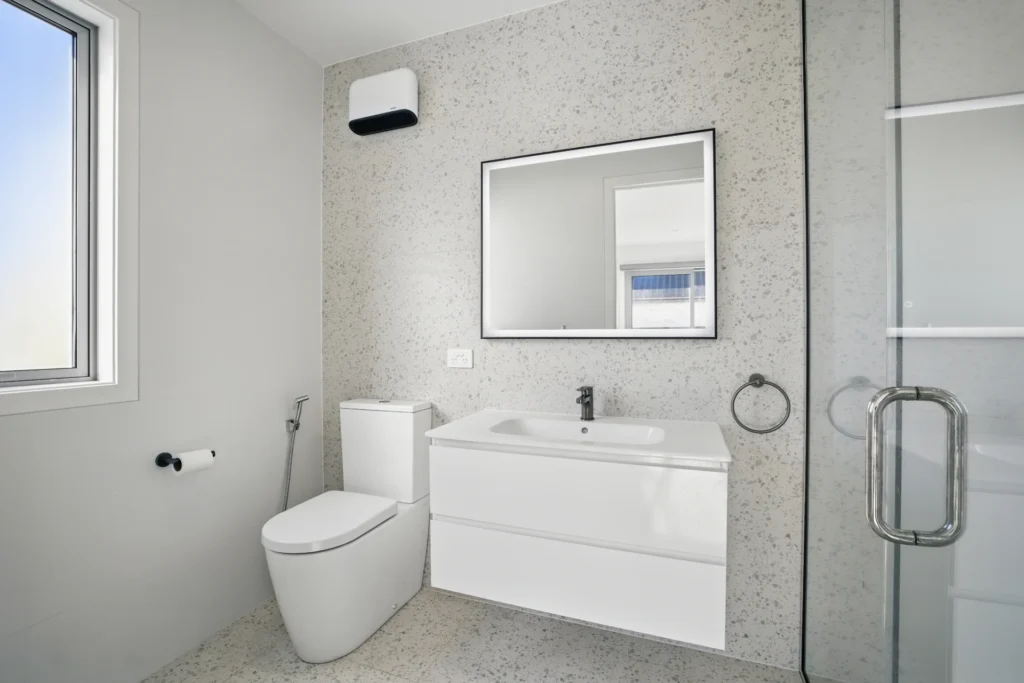
How Much Extra Should You Set Aside For Unexpected Costs?
A bathroom renovation budget should include money for work you cannot identify during the initial inspection. Once old tiles, flooring, cabinetry, and fixtures are removed, contractors may uncover moisture damage, ageing plumbing, damaged framing, or other problems hidden behind finished surfaces. A contingency fund gives you room to deal with these issues without taking money away from essential parts of the renovation.
Common Hidden Bathroom Renovation Costs
Even a well-planned bathroom renovation can uncover additional work after demolition begins. This is especially common in older homes, bathrooms with previous leaks, and properties where the quality of earlier renovation work is unknown. Identifying these potential costs before construction starts can help you set a more realistic bathroom renovation budget.
- Water damage: A slow leak can remain hidden behind tiles, beneath flooring, or inside cabinetry for years. Once damaged materials are exposed, sections of flooring, wall lining, framing, or cabinetry may need repair or replacement before waterproofing and new finishes can be installed.
- Plumbing problems: Older pipes, corroded fittings, poor drainage, or previous non-compliant work may require attention during the renovation. Moving a toilet, shower, bath, or vanity can also increase plumbing costs because existing water-supply and waste connections may need modification.
- Electrical work: Existing wiring and electrical fittings may not suit the new bathroom design or current project requirements. Additional work may be needed for new lighting, power outlets, exhaust fans, heated towel rails, or other electrical fixtures, particularly in an older property.
- Structural repairs: Removing old flooring or wall finishes can expose damaged floorboards, framing, wall structures, or other building components. These problems generally need to be corrected before new waterproofing, tiles, cabinetry, or fixtures are installed.
- Project changes: Changing your mind after work has started can quickly increase bathroom renovation costs. Switching tiles, moving fixtures, changing the vanity size, or altering the layout may require additional materials, labour, plumbing, electrical work, or rework. Making key decisions before construction begins can reduce these avoidable expenses.
Choosing a Sensible Contingency Amount
For many bathroom renovations, setting aside around 10 to 20 percent of the planned renovation cost can provide a useful financial buffer. This is a planning range rather than a fixed rule. The right contingency depends on the property’s age, bathroom condition, renovation scope, and how much is known about the existing plumbing, electrical systems, waterproofing, and structure.
A relatively new bathroom with accessible services and a well-documented renovation history may carry fewer unknowns. An older bathroom that has visible moisture problems, outdated fixtures, previous alterations, or no reliable renovation records may justify a larger contingency.
It is also important to keep contingency money separate from optional upgrades. If you have a total budget of $30,000 and decide to reserve 15 percent for unforeseen work, that money should not be committed to premium tiles or upgraded tapware before demolition. Keeping the buffer available means you can respond to genuine problems without immediately exceeding your planned spending limit.
A realistic contingency does not mean assuming something will go wrong. It means recognising that some parts of a bathroom cannot be properly assessed until existing materials are removed. Building that flexibility into your budget from the beginning can make unexpected repairs easier to manage while protecting the quality of the finished bathroom.
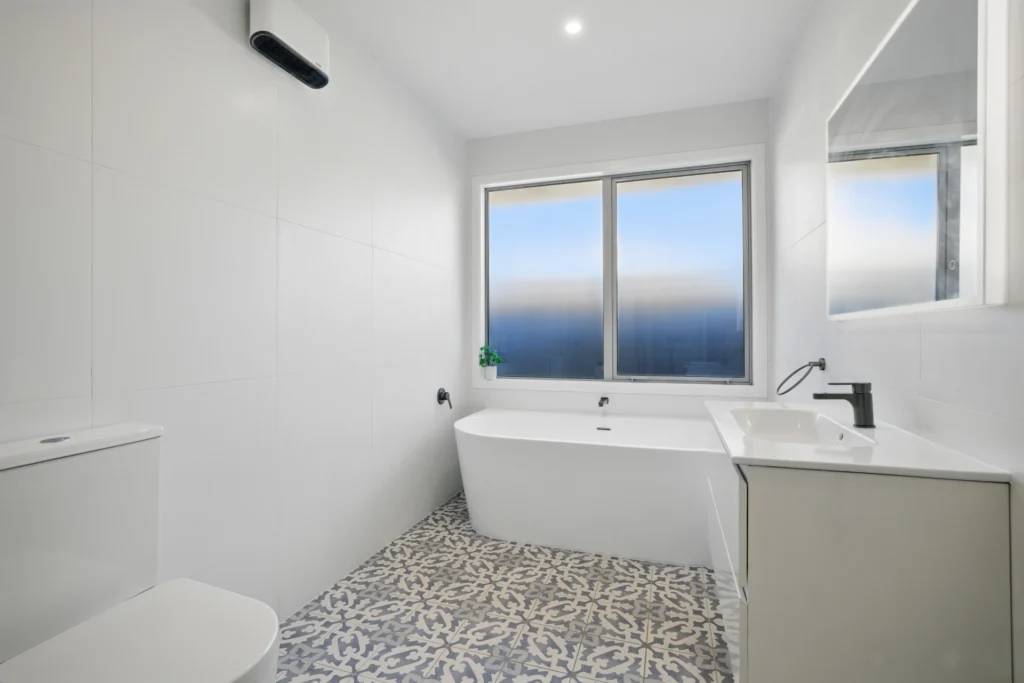
How To Set A Realistic Bathroom Renovation Budget
A realistic bathroom renovation budget starts with understanding the work your bathroom actually needs, not choosing a spending limit based on a general cost estimate. Before requesting quotes or buying fixtures, define the project scope, separate essential work from optional upgrades, and allow room for unexpected expenses. This approach gives contractors clearer information to quote and helps you make spending decisions based on function, durability, and long-term value.
Decide What Actually Needs to Change
Start by assessing the current bathroom rather than assuming everything needs replacing. A bathroom that looks dated may still have a functional layout, usable plumbing locations, sound cabinetry, or fixtures worth keeping. Retaining suitable elements can reduce material and labour costs without compromising the finished result.
Look beyond appearance when deciding what needs attention. Signs of leaking, damaged flooring, poor ventilation, deteriorated grout, unreliable plumbing, or moisture problems may indicate work that should take priority over cosmetic changes.
Separate the project into clear categories:
- Essential repairs: Address leaks, water damage, unsafe electrical components, damaged surfaces, ventilation problems, and other issues that could affect safety or cause further damage.
- Functional improvements: Consider changes that improve storage, lighting, accessibility, shower space, ventilation, or everyday use.
- Cosmetic updates: Identify items such as colours, decorative tiles, mirrors, tapware, and other appearance-focused changes that can be adjusted if the budget becomes tight.
- Existing features: Determine whether the bath, vanity, toilet, cabinetry, or plumbing locations can remain without limiting the renovation.
This assessment gives you a defined renovation scope before you start comparing prices.
Set Your Must-Haves Before Choosing Finishes
It is easy to overspend on tiles, tapware, vanities, and other visible products before accounting for the less-visible work required to make a bathroom function correctly. Establish your must-haves first so essential work receives enough of the budget.
Waterproofing, plumbing, electrical work, ventilation, safe flooring, and reliable fixtures should generally take priority over appearance-focused upgrades. Storage and everyday usability also deserve early consideration because changing these features after construction begins can create extra work.
Create two lists before shopping:
- Must-have features: Include the work and products required for safety, moisture protection, function, storage, and daily use.
- Optional upgrades: Place premium tapware, feature tiles, custom cabinetry, heated flooring, specialty lighting, and similar additions on a separate list.
Once the essential costs are understood, you can decide which optional features fit comfortably within the remaining budget. This makes it easier to reduce spending without compromising important parts of the renovation.
Get Detailed Renovation Quotes
A bathroom renovation quote should tell you more than the total project price. You need to understand what is included, what is excluded, and what could result in an additional charge.
Provide contractors with the same project information wherever possible. This makes quote comparisons more meaningful because each contractor is pricing a similar scope of work.
Review important cost areas such as:
- Demolition: Check whether removal of existing tiles, fixtures, cabinetry, and other materials is included.
- Labour: Confirm which trades and installation work are covered by the quoted price.
- Materials: Identify which building materials are supplied and whether allowances have been used for products that have not yet been selected.
- Specialist work: Check for plumbing, electrical, waterproofing, tiling, carpentry, and other trade-specific costs.
- Fixtures and finishes: Confirm whether items such as the vanity, toilet, shower screen, tapware, bath, tiles, and lighting are supplied or need to be purchased separately.
- Waste removal: Find out whether demolition waste, packaging, and construction debris will be removed as part of the project.
- Exclusions: Ask what is specifically not covered so you can account for those expenses in your total bathroom renovation budget.
Do not automatically select the lowest quote. A lower price may reflect a different scope, fewer inclusions, lower product allowances, or work that you will need to pay for separately. Compare like-for-like quotes and ask questions when an inclusion or exclusion is unclear.
Build the Contingency Into Your Total Budget
Unexpected work is one of the easiest ways for a bathroom renovation to exceed its original budget. Problems such as water-damaged flooring, deteriorated plumbing, damaged framing, or unsuitable previous work may not become visible until existing fixtures and finishes are removed.
Treat your contingency as part of the budget from the beginning rather than money you hope to find later. The amount should reflect the condition and age of the bathroom, the extent of demolition, and how much is known about the existing structure and services.
For example, if you have a fixed amount available for the entire project, do not allocate all of it to the initial renovation quote and product selections. Keep part of the available funds untouched for unforeseen work. Older bathrooms or properties with an uncertain renovation history may justify a larger contingency than a newer bathroom with well-documented plumbing and construction.
If the contingency is not needed, you can decide near the end of the project whether to keep the savings or use part of it for an optional upgrade. This is safer than committing the full budget to premium finishes before essential work is complete.
Setting a realistic bathroom renovation budget comes down to knowing what your bathroom needs, prioritizing essential work, comparing detailed quotes, and preparing for costs that cannot always be identified before demolition. With a clear financial plan in place, you can make better decisions throughout the renovation without sacrificing the features that matter most.

Where Can You Save Money On A Bathroom Renovation?
You can reduce bathroom renovation costs without compromising the parts that protect your home or affect everyday use. The key is to save on choices that are easy to change later while directing more of your budget toward waterproofing, plumbing, ventilation, reliable fixtures, and quality installation. A well-planned budget can help you avoid unnecessary work and reduce the risk of paying for costly repairs or replacements later.
Keep the Existing Bathroom Layout
Keeping your toilet, shower, bath, and vanity in their existing locations is often one of the most practical ways to control bathroom renovation costs. Moving these fixtures may require changes to water-supply lines, drainage pipes, walls, flooring, and electrical connections. The more services that need to be relocated, the more labour and materials the project can require.
This does not mean you should keep an existing layout if it causes genuine problems. A poorly positioned shower, limited storage, restricted movement, or an impractical vanity location can affect how you use the bathroom every day. In these situations, paying more for a better layout may provide greater long-term value.
Before changing the floor plan, ask your bathroom renovator or plumber what work would be required. Sometimes a small adjustment can improve usability without requiring a complete plumbing relocation.
- Keep plumbing locations where practical: Retaining the existing toilet, shower, bath, and basin positions can reduce plumbing and construction work.
- Change the layout for a clear reason: Consider relocation when the current design creates poor access, limited storage, accessibility problems, or wasted floor space.
- Discuss options before demolition: An experienced renovator may identify less-expensive ways to improve the layout while retaining key plumbing connections.
Spend More on Function and Less on Trends
A bathroom needs to handle water, moisture, frequent cleaning, and daily use for many years. For this reason, your budget should prioritize the parts that affect performance and durability before purely decorative upgrades.
Waterproofing is a good example. You may never see the waterproofing system once the bathroom is finished, but failure can lead to water damage and expensive repair work. Ventilation also deserves attention because effective moisture removal can help control condensation and reduce conditions that encourage mould growth.
Frequently used fixtures are another sensible place to focus your budget. Tapware, shower fittings, toilets, cabinetry hardware, and other high-use components need to perform reliably. Spending more on a decorative feature while choosing unsuitable products for everyday use can create a bathroom that looks impressive at first but becomes frustrating or expensive to maintain.
You can often reduce costs by keeping decorative choices simple.
- Prioritize waterproofing: Correct preparation and waterproofing help protect surrounding building materials from moisture damage.
- Choose effective ventilation: A suitable exhaust system helps remove moisture and manage condensation after showers and baths.
- Focus on high-use fixtures: Put more of your product budget toward fixtures and fittings that you will operate every day.
- Limit trend-led purchases: Premium finishes, feature tiles, designer accessories, and decorative upgrades can increase costs without necessarily improving bathroom performance.
- Use premium materials selectively: If you want a higher-end finish, consider using an expensive tile or material as a smaller feature rather than throughout the entire bathroom.
A simple bathroom built with suitable materials and careful installation can offer better long-term value than a trend-focused bathroom where most of the budget has been spent on appearance.
Compare Products Before Buying
Bathroom products should be compared on more than their purchase price. A cheap fixture can become expensive if it is difficult to maintain, needs frequent replacement, has limited warranty support, or requires hard-to-find replacement parts.
Start by considering how the product will be used. A tap in a frequently used family bathroom, for example, may experience far more wear than one in an occasional guest bathroom. Durability and ease of maintenance may therefore matter more than choosing the lowest-priced option.
Check the product specifications and installation requirements before ordering as well. A vanity, bath, toilet, or shower fitting that does not suit the available space or existing services could require additional work or need to be returned.
When comparing bathroom products, consider:
- Durability: Look for materials and construction suited to regular bathroom use and moisture exposure.
- Warranty: Check the warranty period, what it covers, and the process for making a claim.
- Maintenance: Consider how easy the product is to clean, service, and maintain over its expected lifespan.
- Replacement parts: Check whether cartridges, seals, hinges, handles, and other serviceable components are readily available.
- Product availability: Confirm important fixtures are available before scheduling installation, particularly when the project depends on specific dimensions.
- Installation requirements: Check dimensions, plumbing connections, electrical requirements, and installation instructions before purchasing.
The cheapest product is not always the lowest-cost choice over time. A slightly higher initial price can make sense when it provides better durability, easier maintenance, stronger warranty support, or readily available replacement parts.
Smart bathroom renovation savings come from controlling unnecessary costs rather than cutting corners on essential work. Keep existing plumbing locations where they make sense, invest in the parts that affect everyday performance, and compare products based on long-term value as well as price. These decisions can help you stay within your bathroom renovation budget while creating a space that remains practical and reliable for years.
Where Should You Avoid Cutting Costs?
Saving money during a bathroom renovation makes sense, but some parts of the project should not be treated as opportunities for the cheapest possible solution. Waterproofing, plumbing, electrical work, and ventilation directly affect safety, moisture control, durability, and long-term maintenance. You can often save by choosing simpler tiles, standard fixtures, or less-expensive decorative finishes, but cutting corners on essential building work can lead to repairs that cost far more than the initial saving.
Waterproofing and Moisture Protection
Waterproofing is one of the most important parts of a bathroom renovation because bathrooms regularly expose floors and walls to water and high humidity. A waterproofing system needs suitable surface preparation, compatible materials, careful application, and proper treatment around joints, corners, penetrations, and other areas where water can enter.
Failed waterproofing is not always immediately visible. Water can travel beneath tiles or into surrounding building materials before obvious signs appear. Over time, this may contribute to damaged flooring, deteriorated wall materials, loose tiles, mould growth, staining, or damage to adjoining rooms.
The finished tiles should not be treated as the bathroom’s main moisture barrier. The waterproofing system beneath them provides the protection that helps prevent water from reaching vulnerable parts of the building.
When planning your bathroom renovation budget, prioritize correct waterproofing rather than reducing costs through lower-quality preparation or installation.
- Surface preparation: The substrate should be suitable for the waterproofing system and properly prepared before application.
- Wet-area coverage: Waterproofing needs to cover the required areas around showers, baths, floors, walls, and other water-exposed surfaces based on the applicable requirements.
- Critical junctions: Corners, joints, drains, and pipe penetrations require careful attention because these areas can become potential water-entry points.
- Correct installation: Waterproofing products should be installed according to product requirements and applicable building standards.
Spending less on decorative finishes is usually easier to correct later. Repairing failed waterproofing may require removing tiles, fixtures, flooring, or sections of wall before the underlying problem can even be reached.
Plumbing and Electrical Work
Plumbing and electrical work are other areas where price should not be the only consideration. Bathrooms combine water, drainage, electricity, fixtures, and enclosed building services within a relatively small space, making correct installation particularly important.
Plumbing work may involve water-supply lines, drainage, toilets, showers, baths, basins, tapware, and hot-water connections. Poor installation can result in leaks, inadequate drainage, water-pressure problems, or hidden moisture damage.
Electrical work can include lighting, power outlets, exhaust fans, heated towel rails, underfloor heating, and other bathroom equipment. Because electricity and water create specific safety concerns, electrical installations need to meet the rules that apply in your location.
Where local regulations require licensed or appropriately qualified tradespeople, include those costs in your bathroom renovation budget from the beginning.
- Qualified trades: Use appropriately licensed or qualified plumbers and electricians where required for the work being completed.
- Local requirements: Check applicable building codes, permits, electrical rules, plumbing requirements, and inspection requirements before construction begins.
- Hidden services: Consider the condition of existing pipes, drains, wiring, and connections, particularly when renovating an older bathroom.
- Detailed quotes: Ask contractors to clearly state what plumbing and electrical work is included so essential work does not become an unexpected cost later.
Keeping the existing bathroom layout can sometimes reduce costs because major plumbing changes may be avoided. This is a sensible saving when the layout already works. Using unsuitable materials or unqualified labour to reduce the initial price is a shortcut that can increase safety and repair risks.
Ventilation
Bathroom ventilation can receive less attention because an exhaust system is not as visually noticeable as new tiles or a vanity. It still plays an important role in managing the moisture created by showers, baths, and hot water.
Without adequate ventilation, moisture can remain in the room and collect as condensation on ceilings, walls, windows, cabinetry, and other surfaces. Persistent moisture can encourage mould growth and contribute to peeling paint, swollen cabinetry, damaged finishes, unpleasant odours, and deterioration of moisture-sensitive materials.
Good bathroom ventilation should remove humid air effectively rather than simply moving it around the room. The appropriate system will depend on factors such as bathroom size, layout, airflow, local requirements, and how frequently the room is used.
- Exhaust capacity: Choose a ventilation system suitable for the bathroom’s size and moisture levels.
- Air movement: Plan how fresh air can enter the room while humid air is extracted.
- Installation location: Position the exhaust system where it can effectively remove moisture generated by showers and baths.
- Ongoing maintenance: Keep vents and fans clean so dust build-up does not reduce airflow over time.
A bathroom renovation budget does not need to prioritize premium products in every category. Focus your spending on the work that protects the bathroom and the surrounding property first. Once waterproofing, plumbing, electrical work, and ventilation are properly accounted for, you can make more flexible choices about fixtures, tiles, cabinetry, and decorative finishes without compromising the bathroom’s long-term performance.
Should You Renovate The Whole Bathroom At Once?
Renovating the entire bathroom at once can make sense when several parts of the space need attention, but a full renovation is not always necessary. The right approach depends on the bathroom’s condition, your available budget, how well the current layout works, and whether problems exist behind the visible finishes. Before committing to a complete bathroom renovation, assess the plumbing, electrical systems, waterproofing, ventilation, fixtures, and overall functionality. In some cases, targeted improvements can solve the main problems without the cost and disruption of rebuilding the entire room.
When a Full Renovation Makes Sense
A complete bathroom renovation is often the more practical option when problems affect several parts of the room. Completing related work together can also prevent you from paying to remove recently installed finishes later because an older plumbing or waterproofing issue needs repair.
- Outdated plumbing or electrical systems: Older pipes, drainage, wiring, outlets, or electrical components may need upgrading as part of the renovation. If walls and floors already need to be opened for this work, completing other planned improvements at the same time can reduce repeated demolition and repair work.
- Persistent moisture or waterproofing problems: Recurring leaks, damaged grout, swollen cabinetry, loose tiles, musty smells, or visible water damage can indicate a deeper moisture problem. Simply replacing surface finishes may hide the symptoms without addressing the cause. A full renovation provides an opportunity to inspect the underlying structure and complete necessary waterproofing and repairs before installing new finishes.
- Poor layout or accessibility: A bathroom that feels cramped or difficult to use may benefit from more than cosmetic changes. Repositioning a vanity, improving shower access, adding practical storage, or changing fixture locations can make the room easier to use, although layout changes may increase bathroom renovation costs when plumbing or electrical services need to move.
- Multiple ageing fixtures: Replacing a toilet today, a vanity several months later, and the shower soon after can lead to repeated labour costs and disruption. When several fixtures are approaching the end of their useful life, renovating them together may provide a more consistent result and make budgeting easier.
A full renovation also gives you the chance to coordinate waterproofing, plumbing, electrical work, tiling, cabinetry, ventilation, and fixtures as one project. This can be useful when the existing bathroom has several interconnected problems rather than one isolated issue.
When a Smaller Update May Be Enough
You do not need to remove a functional bathroom simply because it looks dated. If the underlying systems remain in good condition, targeted updates can improve comfort, storage, and appearance while keeping your bathroom renovation budget under control.
- The bathroom is structurally sound: If the walls, floors, tiles, and other structural elements show no signs of significant movement or water damage, there may be little reason to rebuild them. Updating selected features can refresh the room without unnecessary demolition.
- Plumbing and waterproofing are performing well: A bathroom with reliable plumbing, effective drainage, and sound waterproofing may only require surface-level improvements. Keeping these systems intact can reduce both project costs and construction time.
- Appearance is the main concern: If you simply dislike the style of the bathroom, consider replacing items such as mirrors, tapware, lighting, cabinet hardware, or selected fixtures. Painting suitable surfaces can also change the appearance without requiring a complete renovation.
- Storage needs improvement: Poor storage does not automatically justify rebuilding the bathroom. A better-designed vanity, wall-mounted cabinet, recessed storage solution, or shelving may solve the problem while retaining the existing layout.
- Lighting needs attention: Updating poorly positioned or outdated lighting can improve visibility and make the bathroom more functional. Electrical work should be completed by an appropriately qualified professional where required by local regulations.
Before choosing a smaller update, make sure the bathroom does not have hidden problems that cosmetic work could cover. Signs of recurring leaks, damaged flooring, mould growth, loose tiles, or unexplained moisture deserve further investigation before money is spent on new finishes.
The best approach is to renovate according to the bathroom’s actual condition rather than assuming that newer is always better. If the plumbing, waterproofing, layout, and main fixtures are still performing well, targeted updates may provide the improvements you need at a lower cost. When several major systems require attention, completing a full bathroom renovation at once can provide a more practical long-term solution.

Bathroom Renovation Budget Mistakes To Avoid
A bathroom renovation can become more expensive than planned when important decisions are made too early or without enough detail. Many budget problems come from an unclear project scope, spending too much on visible features, making changes during construction, or comparing quotes based on price alone. Careful bathroom-renovation planning can help you control costs while protecting the quality, function, and long-term durability of the finished space.
Setting the Budget Before Defining the Scope
Setting a budget is useful, but the figure needs to reflect what the bathroom actually requires. A homeowner might decide on a spending limit before checking the condition of the plumbing, waterproofing, electrical work, flooring, or existing fixtures. Once these requirements become clear, the original budget may no longer match the project.
Start by defining exactly what will stay, what needs replacing, and whether the existing layout will change. Moving a toilet, shower, bath, or vanity can require additional plumbing and building work. Older bathrooms may also reveal water damage or deteriorated materials once demolition begins.
A clear project scope gives contractors enough information to prepare more meaningful estimates. It also makes bathroom-renovation quotes easier to compare because each contractor can price similar work rather than making assumptions about what the project includes.
Before settling on a final budget, consider:
- Existing condition: Check whether the bathroom has known leaks, moisture damage, poor ventilation, damaged surfaces, or outdated plumbing and electrical components.
- Renovation extent: Decide whether you need a cosmetic update, partial renovation, or complete bathroom renovation.
- Layout changes: Identify whether major fixtures will remain in their existing positions or require relocation.
- Essential work: Allow for waterproofing, plumbing, electrical work, ventilation, surface preparation, and other less-visible requirements.
- Contingency allowance: Keep part of your available budget aside for problems that may only become apparent after demolition.
Defining these details first gives you a more realistic basis for deciding what you can afford.
Spending Too Much on Visible Finishes
Premium tiles, designer tapware, custom vanities, mirrors, and statement lighting can quickly consume a bathroom-renovation budget. These features may improve the appearance of the room, but they should not take priority over the work that keeps the bathroom functional and durable.
Waterproofing is a good example. You will not see the waterproofing system once the bathroom is complete, yet poor preparation or installation can lead to moisture damage and expensive repairs. The same principle applies to plumbing, electrical work, ventilation, drainage, and substrate preparation.
A practical budget gives essential technical work priority before allocating money to decorative upgrades. If costs need to come down, consider choosing well-made mid-range fixtures or reducing the amount of premium tile rather than compromising work behind the finished surfaces.
- Prioritize function: Allocate enough money for plumbing, waterproofing, electrical work, drainage, and ventilation before selecting optional upgrades.
- Compare total costs: A tile’s purchase price is only part of its cost. Complex patterns, large-format products, or difficult installation requirements may increase labour charges.
- Choose durable products: Consider expected lifespan, maintenance requirements, warranty coverage, and replacement-part availability rather than appearance alone.
- Limit premium features: Use higher-cost finishes selectively where they provide the most value instead of specifying them throughout the entire bathroom.
A balanced bathroom budget should support both appearance and performance. Spending less on one decorative feature may give you more room to fund work that protects the bathroom for years.
Making Changes After Work Begins
Changing your mind during a bathroom renovation can affect more than the price of a new fixture. A seemingly simple change may alter plumbing locations, electrical work, cabinetry dimensions, waterproofing, tiling, or the construction schedule.
For example, deciding to move a vanity after plumbing work has started may require completed work to be altered. Changing the tile after installation dates have been scheduled could also create delays if the replacement product is not immediately available.
These changes are commonly handled as variations to the original scope. Depending on the project, a variation may involve additional materials, labour, trade visits, administration, or scheduling changes.
You can reduce this risk by making key decisions before construction begins.
- Confirm the layout: Finalize the positions of the shower, toilet, vanity, bath, storage, lighting, and other major features before work starts.
- Select products early: Confirm product dimensions and availability so trades can plan installation around the correct specifications.
- Review the details: Check finishes, tile layouts, fixture positions, storage requirements, and electrical locations before approving the work.
- Understand variations: If you request a change, ask for its cost and potential schedule impact before approving it.
Some changes are unavoidable, especially when demolition reveals an unexpected problem. Avoidable design changes are different. Making decisions early gives the renovation team a clearer plan and reduces the risk of paying for the same work twice.
Choosing a Quote Based Only on Price
The cheapest bathroom-renovation quote is not automatically the best value. Two quotes with different prices may cover very different scopes of work, products, allowances, and responsibilities.
One contractor might include demolition, waste removal, waterproofing, tiling, plumbing, electrical work, and finishing. Another quote may leave some of these costs out or treat fixtures and materials as separate expenses. Comparing only the final figures can therefore give a misleading impression of which option costs less.
Read each quote carefully and compare like-for-like work wherever possible.
- Inclusions: Check exactly which labour, materials, fixtures, preparation work, and services are included in the quoted amount.
- Exclusions: Identify work or products you will need to arrange or pay for separately.
- Product allowances: Check whether allowances are realistic for the fixtures and finishes you intend to choose.
- Experience: Look for relevant bathroom-renovation experience and evidence of completed work similar to your project.
- Warranty details: Understand what warranties apply to workmanship and supplied products.
- Project scope: Confirm that each contractor is pricing the same work, layout, materials, and level of finish.
- Quote detail: Look for a clear breakdown that helps you understand what you are paying for rather than relying on a single total figure.
A detailed quote can also reduce misunderstandings once work starts. When responsibilities, materials, and exclusions are clear from the beginning, you have a stronger basis for managing the bathroom-renovation budget throughout the project.
Avoiding common bathroom-renovation budget mistakes starts with planning the work before committing your money. Define the scope, fund essential technical work first, make major decisions before construction, and compare detailed quotes carefully. These steps can help you control unexpected costs while creating a bathroom that meets your practical needs and budget.
Ready to turn your bathroom renovation budget into a clear project plan? Explore our bathroom renovation services to see how experienced planning, practical material choices, and professional workmanship can help you get more from your budget. Whether you are updating a small bathroom or planning a complete renovation, take the next step and request a detailed quote based on your space, priorities, and project requirements.
References
- How Much Does a Bathroom Remodel Cost? 2026 Data
https://www.angi.com/articles/how-much-does-bathroom-remodel-cost.htm - Bathroom Remodel Cost 2026 Guide and Budgeting Tips
https://www.thisoldhouse.com/bathrooms/bathroom-remodel-cost - Small Bathroom Remodel Cost: 2026 Price Guide
https://www.thisoldhouse.com/bathrooms/small-bathroom-remodel-cost - The Ultimate Bathroom Remodel Checklist
https://www.angi.com/articles/bathroom-remodel-checklist.htm - Redoing Your Bathroom? Read This!
https://www.thisoldhouse.com/bathrooms/redoing-your-bathroom-read-this

FAQs: About What Is A Good Budget For A Bathroom Renovation?
What Is a Good Budget for a Bathroom Renovation?
A good bathroom renovation budget should cover labour, waterproofing, plumbing, electrical work, tiling, fixtures, finishes, and a contingency for unexpected costs. The amount you need will depend on the bathroom size, existing condition, project scope, material choices, and local labour rates.
What Is the Most Expensive Part of a Bathroom Renovation?
Labour, plumbing, tiling, waterproofing, and fixtures can account for large portions of a bathroom renovation budget. Costs can rise further when plumbing fixtures are moved, structural repairs are required, or premium materials are selected.
How Much Should I Set Aside for Unexpected Bathroom Renovation Costs?
Many renovation budgets include a contingency of around 10 to 20 percent, although the appropriate amount depends on the condition and age of the bathroom. Older bathrooms may need a larger allowance because water damage, plumbing problems, or structural issues can become visible after demolition begins.
Is It Cheaper to Renovate a Small Bathroom?
A small bathroom often requires fewer tiles and materials, but it is not always significantly cheaper to renovate. Plumbers, electricians, waterproofers, and other trades may still have similar fixed or minimum costs regardless of the room’s size.
How Can I Reduce the Cost of a Bathroom Renovation?
Keeping the existing layout can reduce the need to relocate plumbing and electrical services. You can also control costs by choosing durable mid-range fixtures, limiting unnecessary custom work, comparing products carefully, and deciding on materials before construction starts.
Is It Cheaper to Keep the Toilet and Shower in the Same Location?
Keeping the toilet, shower, bath, and vanity in their existing positions can often reduce renovation costs because less plumbing work may be required. Relocating fixtures can involve changes to water supplies, drainage, flooring, walls, and other parts of the bathroom.
Where Should I Avoid Cutting Costs During a Bathroom Renovation?
Avoid taking shortcuts with waterproofing, plumbing, electrical work, ventilation, and other work that affects safety or moisture control. Poor workmanship in these areas can lead to leaks, mould, electrical problems, and expensive repairs later.
Should I Buy Bathroom Fixtures Before Getting a Renovation Quote?
It is usually better to define the renovation scope and discuss fixture requirements before making major purchases. Your renovator or tradespeople can confirm dimensions, installation requirements, compatibility, and whether your chosen products suit the available space.
How Do I Know if a Bathroom Renovation Quote Is Reasonable?
Compare detailed quotes that cover the same scope rather than looking only at the final price. Check what each quote includes for demolition, labour, materials, waterproofing, plumbing, electrical work, tiling, waste removal, fixtures, warranties, and potential additional charges.
Is a Full Bathroom Renovation Always Necessary?
No. If the waterproofing, plumbing, layout, and main fixtures remain in good condition, targeted updates such as new tapware, lighting, storage, paint, or selected fixtures may be enough. A full renovation makes more sense when the bathroom has persistent moisture problems, outdated services, a poor layout, or several components that need replacement.
Conclusion
A good bathroom renovation budget is one that realistically covers the full project scope, professional labour, suitable materials, and a contingency for unexpected work without depending on low-cost assumptions that may not reflect the finished project. Start by prioritizing the parts of the bathroom that affect everyday function and long-term performance, including waterproofing, plumbing, ventilation, electrical work, and durable fixtures, before spending more on optional finishes or design upgrades. Define exactly what you want to change, what can remain, and which features matter most before setting your final budget. Once the scope is clear, request detailed bathroom renovation quotes that show the work, materials, inclusions, and potential additional costs so you can make a fair comparison. If you are ready to move forward, request a detailed bathroom renovation quote or project assessment based on your existing bathroom, renovation priorities, and available budget to get a clearer picture of what your project may require.